Browse 2026 Seed Collection

How to Germinate Cannabis Seeds for Success

Last Updated: February 24, 2026
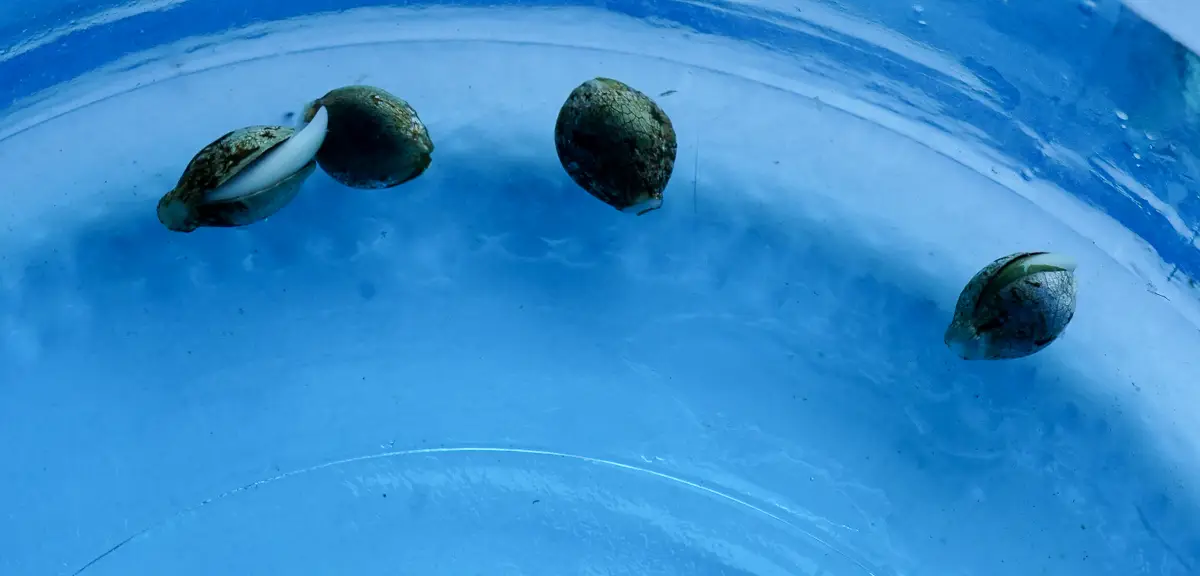
Four cannabis seeds soaking in a blue cup of purified water with one seed showing a visible white taproot.

Whether you are a first-timer or a seasoned pro looking to refine your technique, learning how to germinate weed seeds correctly is the difference between a massive harvest or a wimpy stash. And let’s be real, the goal here is to grow more weed than you need.

And it all starts from a tiny seed! Want to know what is the best way to germinate cannabis seeds? We got you covered 🙂

Germination -> Sprout Shortcuts

Before You Start: The Setup

To ensure a 100% success rate, gather these supplies:

Step 1: Selection and Viability

Pick the strain/variety that is best for your climate, growing conditions, and your individual high goals (your pipe dreams so to speak).

When choosing the type of cannabis to grow, just remember that autoflower seeds are best for beginners and those trying to grow quickly and in smaller spaces or those looking for the least maintenance or wanting to grow year round (these are the most versatile). Early flowering photoperiod seeds if you are growing outdoors in the spring and have super hot/long summers or just have less patience and want to harvest in July or August instead of October. Full term photoperiods are best for those that want to grow giant cannabis plants.

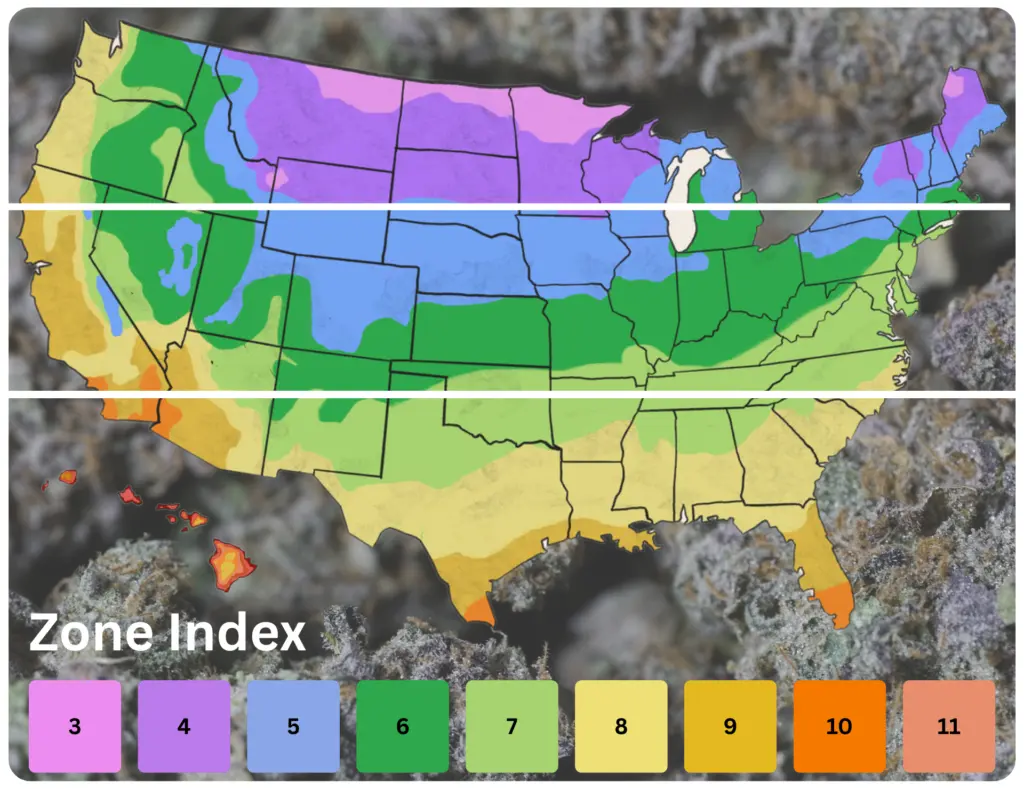
Need ideas? Scan our interactive map with top strains for every environment and growing zone. Or you can reach out to our grow coaches to get personalized recommendations.

Interactive USDA Hardiness Zone map for selecting cannabis seeds based on local climate, frost dates, and growing season length.
Cold Growing Zones 3 - 6

Cannabis seeds selected for cooler zones and shorter growing season. Northern regions are great fro early flowering strains, or autoflowers. Explore Stains

Warm Growing Zones 5 -11

This is the home of cannabis, it evolved in this latitude and loves it. Grows cannabis extremely well all Spring, Summer, and Winter. Explore Stains

Tropical Growing Zones 5 -11

Cannabis plants have adapted to grow in a wide range of climates. Browse our strains for humid and hot conditions. Some plants are just built different. 

Check for viability– is this seed still good?

A good way to tell is by squeezing. A healthy cannabis seed is tough and hard and can withstand some pressure before cracking. While cannabis seeds can come in many colors (ranging from light to dark brown, without or without tiger stripes), if the seed cracks or flattens with a little finger pressure, it is no good. Most likely too old or immature. You’ll confirm viability after the next step.

Step 2: The 24-Hour Soak

Soak the seed in a small cup of room temp or lukewarm filtered or spring water in a dark place for 24 hours. Growing in the office, we like to set our cup of soaking seeds on top of the internet modem for a little extra warmth. A kitchen cabinet is also a good alternative. 

Pro-tip: Never use plain tap water! Invest in a good filter for your plants and yourself. Tap water contains chlorines, pesticides, and heavy metals that can stunt your seed’s taproot.

After the soak, your seed should have sunk to the bottom of the container. If it has not, give it a tap and see if it sinks. Good seeds sink. If your seed doesn’t sink, you can still plant it, but have a back up plan just in case a seedling doesn’t pop up.

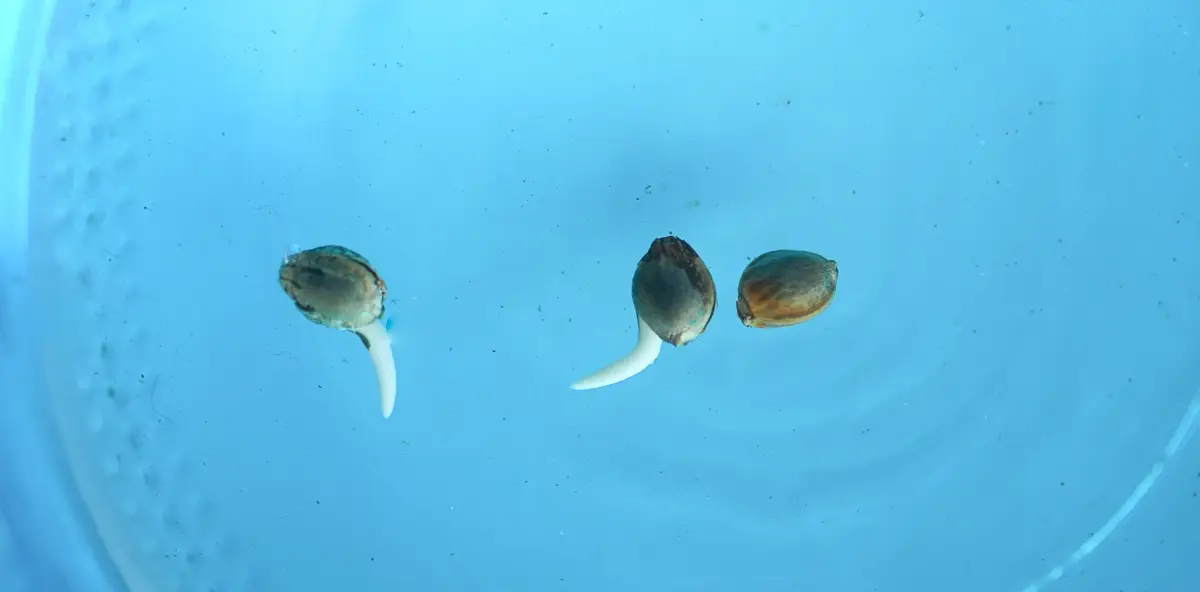
Three cannabis seeds that have sunk after soaking in a blue cup, with two seeds beginning to crack open and show the white interior of the taproot.

What if it hasn't "popped"?

Sometimes within 24 hours your cannabis seed may absorb enough water for the shell to swell and soften enough to crack open. Emerging from the seed is a small, white taproot known as the radicle. 

The emergence of the radicale is the technical sign of a successful germination, meaning that a dormant seed has been biologically triggered to begin to grow. (Though most don’t count a successful germination until the appearance of the sprout’s first true leaves.)  Once the taproot has materialized, it’s job is to grow downward, stabilize the plant, and start uptaking nutrients. We think it’s best for your future plant to experience this first rooting inside a growing medium. That’s why we stick with the 24 hour soak and plant before the taproot has fully emerged. This is the best of both worlds as the seed casing still gets time to be fully immersed in water to soften and crack. And you are not adding undue stress to your seedling’s fragile beginnings. 

Step 3: Planting into Jiffy Pellets

Plant the seed! The most exciting part! We love our seed starter kits and plant all our seeds in jiffy pellets. Jiffy pellets are designed to be the perfect medium for starting seeds. They are easy to hydrate and plant into, and even easier to transplant. Cannabis seeds should be planted less than ¼ inch deep.

What side to plant down?

Plant the pointy end down. If your seed has popped a tap root, this should be planted down. Don’t know which side is which? Plant the seed sideways and it will orient itself. I personally finish planting every seed by pouring a small drop of water on top. The water pulls the seed into the correct position and helps it snuggle into the soil. Just like how seeds are naturally planted in nature!

Step 4: Light and Observation

Add light. Place your planted seed in a well lit area– windowsill, or under a grow light. Light is energy and is what your soon-to-be sprout will head towards.

Wait about 4 days. Most seedlings break the surface in 3 to 4 days. Some, if planted deeper or upside down, can take a week to 10 days. If your seedling doesn’t surface in a week, do a little digging to see if there are any signs of life.

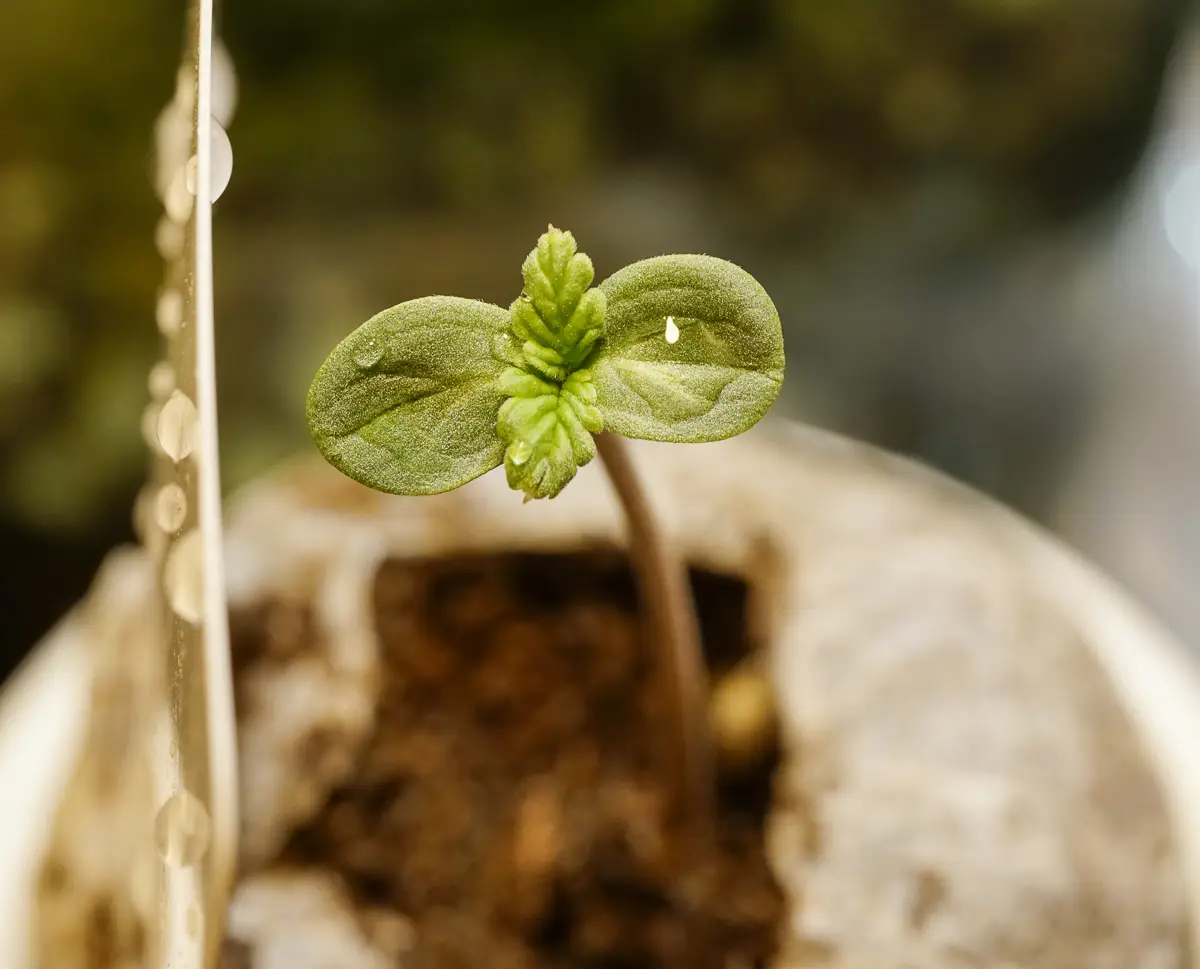
The first leaves to show are the cotyledons or the ‘seed leaves’– which are round and smooth. The second set of leaves is the first set of true leaves– these are serrated. When you see these first true leaves starting to unfurl, that’s when you transplant the whole jiffy pellet into her forever pot. This is typically a week after planting the seed. 

A young cannabis seedling sprout emerging from a Jiffy pellet, displaying its first two round cotyledon leaves and the start of true leaves.

Perfect Planting: Summary Checklist

  • Check Viability: Hard = Good.
  • Soak: 24 hours in the dark in filtered or spring water.
  • Plant: Pointy side down in a jiffy pellet.
  • Environment: Keep it warm and bright with fresh air.

Why We Avoid the Paper Towel Method

But what about the paper towel germination method? Hard pass. For several reasons. Firstly, paper towels are bleached and seeds are sensitive. That bleach that makes paper towels so white can be detrimental to the biology of your seed.

Then comes the whole transplant process. When you germinate a seed with a paper towel, most wait until the taproot has sprouted and grown significantly. Roots are really delicate and do not like being disturbed. Once the taproot has sprouted, your plant is already trying to build stability and there are tiny offshoots of that root digging into the paper towel. To transplant into whatever you plan to grow in, you have to remove these microscopic roots from the paper towel which means your plant is already starting out with stress. The goal is to stress as little as possible or with perfectly timed intention. Better stick with a jiffy pellet for stress-free transplanting!

The Humidity Dome Myth

What about a humidity dome? Depends on your environment, but typically these are best avoided. Not only do these domes trap stagnant air, too much humidity– and you are inviting in damping off disease. Yes, cannabis seedlings like warmth and humidity, but cannabis is not a tropical plant and should not be treated as such. Ideal temperature for cannabis seedlings is around 70 degrees Fahrenheit and 65% RH. I think humidity domes gained in popularity because they are essential for clones who are more plant material than root at first and need to absorb moisture through their leaves. However, with seedlings, the roots are developing before and along with the visible plant and can support the growing plant’s water intake. It’s naturally designed that way. 

Troubleshooting: What if the shell gets stuck?

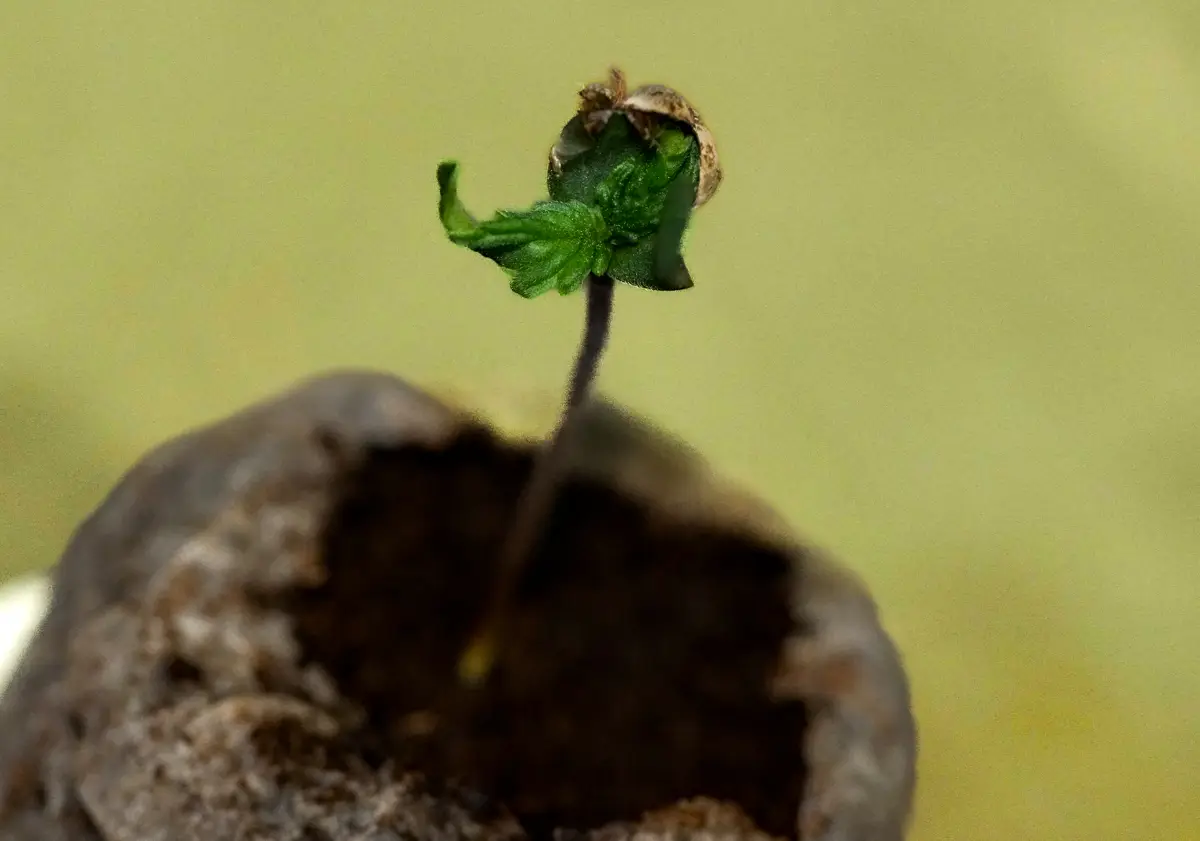
A resilient cannabis seedling successfully breaking through a stuck seed casing (helmet head) while growing in a Jiffy pellet.

Occasionally, a seedling emerges but the seed shell is stuck to the leaves (often called “Helmet Head”). If this happens, don’t panic. You have some options: 

  • Mist it: Lightly spray the shell with water to soften it.
  • Wait: Often, the expanding leaves will push it off naturally.
  • Gentle Assist: Only if it hasn’t fallen off after 24 hours, use tweezers or your fingers to very gently nudge it off.
There are many reasons why the seed casing gets stuck and typically it is no big deal. However, you may want to consider increasing the quality of your light. But never underestimate how resilient a cannabis plant can be and sometimes the weirdest little seedlings can become the biggest monsters of plants. 

Strongest Weed Plants Comes From Seeds

Cannabis plants grown from seed are stronger than clones! Taking the time to start from a fresh seed for each grow always leads to the best harvest. Compared to clones, plants grown from seed tend to be healthier and more robust. Add unfiltered sunshine whenever possible and you will grow an amazing cannabis plant. 

They say that the best time to plant a seed was yesterday– but the second best time is right now. 😉 

So, get to popping! 

FAQs: Everything You Need to Know About Germinating Cannabis Seeds

How long does it take for cannabis seeds to germinate?
With soaking, most cannabis seeds will crack and sprout a taproot in 24-48 hours. After planting, most healthy cannabis seeds break the surface in 3 to 4 days, though some can take up to 10 days depending on the depth and variety.
What does a weed seed need to germinate?
To germinate successfully, cannabis seeds need a specific combination of environmental factors that simulate spring-like conditions: moisture, warmth, oxygen, and darkness. These elements trigger the seed to soften and break its protective shell and initiate the growth of the radicle (taproot).
What is the best temperature for germinating weed seeds?
The sweet spot for germination is between 70°F and 85°F (21°C–29°C). Consistent warmth is key to "waking up" the seed.
My seed didn’t sink after 24 hours—is it dead?
Not necessarily! Sometimes an air bubble keeps a good seed afloat. Give it a gentle tap and it should sink; if it still floats, you can still plant it, but it may have a lower germination rate.
Can I use tap water to soak my seeds?
It’s best to avoid it. Tap water often contains chlorine and chemicals that can be harsh on a sensitive taproot. Use purified, spring, or distilled water for the best results. We strongly encourage getting a good filter for your whole home.
Which side of the cannabis seed goes down in the soil?
Plant the pointy end down. This is where the taproot (radicle) emerges. If you aren't sure, plant it sideways—the seed is smart enough to orient itself!
Do cannabis seeds need light to germinate?
No, seeds actually germinate best in a dark environment. However, once the sprout breaks the soil surface, it needs light immediately to begin photosynthesis. We like to add light after the 24 hour soak and planting the seed.
What is the best medium for germinating cannabis seeds?
We love jiffy pellets! They mimic the plant’s favorite natural medium and allow for easy, stress-free transplanting.
What is damping off?
Damping-off is a death sentence: toxic water-mold or fungal disease that kills germinating seeds and young seedlings, causing them to suddenly collapse, rot at the soil line, and die. This is why airflow is key to happy seedlings! It’s also a good practice to water only as much as your plant needs– never letting the grow medium dry out, but never leave it soaking wet.

Learn how to cultivate marijuana. Find the best marijuana growing advice for seed germination, cloning, pruning, trimming, and curing to help maximize your yields.

It's better Homegrown

Enjoy delicious, all natural bud @ home!

Price range: $79.99 through $284.75

Price range: $99.95 through $420.00

Latest Post

Puff Puff Pass the News

share this with your tribe

Related Articles
WE BUILT THE ULTIMATE KIT TO GROW WEED AT HOME
gift-card-1

Confirm Your Age

You must be 21 years old or over to enter our website.

By entering this site you are confirming you are over 21 years old and agreeing to the Terms and Conditions