
Marijuana is one of the most genetically diverse herbs on the earth. This article will help you understand what the difference is between indica vs sativa. There are many cannabis strains worldwide, all with different terpene profiles and weed growing preferences. But did you know there are only four different strains of cannabis: Indica, Sativa, Ruderalis and hybrid? We will explore why some are regarded as the best cannabis strains and why others are called ditch weed strains.
Guides in this series
- Blue Dream seeds: A full review of the Blue Dream strain with growing tips.
- GSC strain review: A grower’s and buyer’s guide to the Girl Scout Cookies strain.
- OG Kush growing tips: A full review of OG Kush, with its history and growing tips.
- Runtz strain review: A review of the Runtz strain, with its look, flavor and what to know about growing it.
- Rare cannabis strains: A look at rare cannabis strains and why they are difficult to obtain.
Strains of Weed Vs Species of Weed
Strains are sub-categories of the species belonging to the Cannabaceae family, which are either indica, sativa, or hybrid, along with whether it is a photoperiod or autoflowering species. Because of cross-breeding, the cannabis plant is one of the most genetically mutated herbs on the planet– literally every seed is different even with the same parents. Homogenized genetics has yet to infiltrate the cannabis plant. That’s why there are so many different varieties.
What gives cannabis strains their name?
The breeder who discovers a particular cannabis strain is the one who names the exotic marijuana they have created. The given hybrid strain name oftentimes is a combination of words or a reference to the strains that started it. And sometimes they are just named that because it is fun, like Unicorn Poop. Or as a sign of respect to a certain individual who most people would regard as a champion of cannabis history, such as Jack Herer.
How are weed strains made?
For thousands of years, humans have been crossbreeding their favorite female and male plants to create blue weed strains, purple ones, short cannabis strains, and hemp.
Because of globalization, there is no such thing as true wild cannabis strains anymore. Landrace seeds are about the closest you can get to original genetics before the explosion of cross-breeding and creating hybrid strains stormed the world from Amsterdam’s best seed banks. Today, new strains are created all the time, and this continually evolves the different strains to yield more.
Related: Highest THC Strains List
What are weed strains?
Firstly, to understand cannabis strains, you need to learn about the three categories or buckets assigned to the different types of weed. The current accepted theory is that there are three different species: C. indica, C. sativa, and hybrid. Often, this is not an exact science but rather an educated guess by growers who place strains into these buckets based on their look.
Sativa Strains

Over the years of trying to put cannabis in a box, there have been many theories and misunderstandings.
For example, toxicologists have focused on the plants’ structures, such as their narrow cannabis leaves and how they grow in a tall, lanky fashion which is preferred by the textile industry. Toxicologists still regard Cannabis sativa strains as hemp. However, this is only true under federal law if the final bud grown from the cannabis plant contains less than 0.3% THC.
Sativa strains are often referred to as hazes.
Sativa Growing Traits
Generally skinny tall plants, their leaves are often long and thin. These plants do well in equatorial regions. The female plant typically takes 10 to 14 weeks to fully flower, partly because of the equatorial latitude in which cannabis plants evolved. They also grow better than others in a slightly more humid growing environment. These plants grow best outside due to their height.
Sativa Terpene Profile
As the science of cannabis evolves, we are getting more peer-reviewed studies that give us a better understanding of what terpenes we commonly find Sativa dominant varieties. The most present terpenes in sativa strains are α-Humulene, β-Pinene, Linalool, and β-Caryophyllene.
Most Popular Cannabis Sativa
Some of the most popular marijuana strains are Sativa dominant such as Blue Dream, Red Congolese, Sour Diesel, Durban Poison, Super Lemon Haze, and Acapulco Gold.
Indica Strains

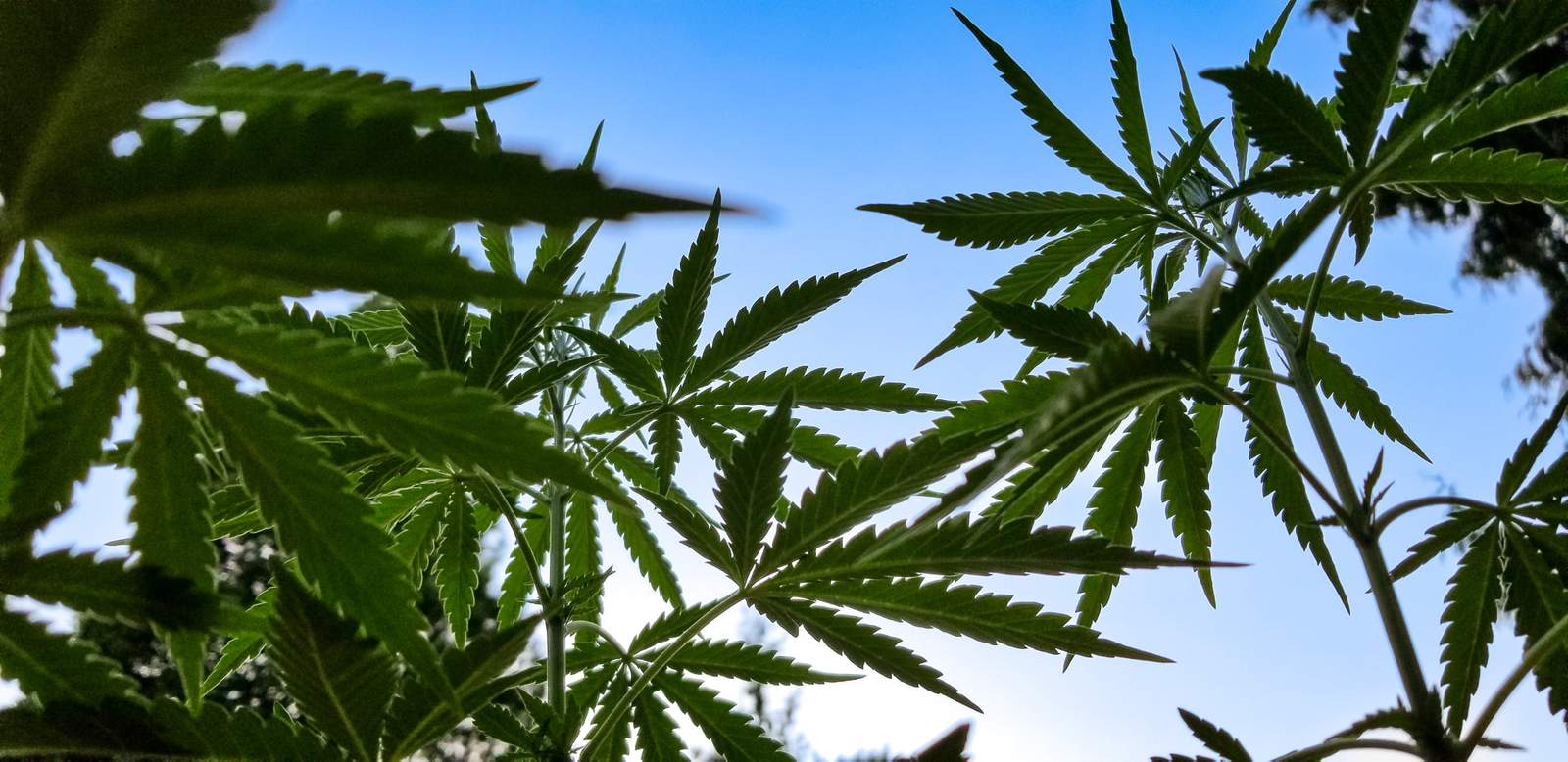
Perhaps one of the most popular strains of cannabis is Cannabis indica. The term indica came about from the physical shape of this plant. The female cannabis plant will have broad leaflets, like seen above, and be short and stocky.
Indica Growing Traits
Indica strains are considered easier flowers to grow, mostly because they are quicker to harvest, so there is less time for anything to go wrong. The leaves are much wider than their Sativa sister. The short height of these shrubby bushes made them a favorite plant to grow indoors, and their quick flowering period of 8 to 10 weeks makes them a more profitable strain for commercial and hobbyist growers. Indica nugs are often much denser than Sativa buds. Afghan Kush is a perfect example of an OG Indica, these plants were originally found in the dry arid mountains of Afghanistan.
Indica Terpene Profile
The nose always knows as they say. What you are smelling is the plant’s terpenes. The most popular terpenes found in C. indica plants are Myrcene, Beta-Caryophyllene, Limonene, Linalool, and Humulene. These smells make it easier to identify the cannabis variety, often times they smell of gas or earthy tones.
Best Indica Strains
Indica’s most common characteristic is dense nugs that are covered in trichomes.
Classic varieties like White Rhino and Platinum OG have set the bar for the top Indica strains. Seed breeders are constantly creating new indica strain names like GMO and Biscotti to be the best-smelling marijuana strains.
Hybrid Weed Strains

Nobody knows how many strains of marijuana are now hybridized, although it is probably most, if not all. Pure unadulterated cannabis doesn’t exist anymore. Still, some are easier to assign growing characteristics to a certain bucket. While some are very hard to classify as an indica or sativa.
For that reason, we call them hybrid strains. This is because they have cannabinoid profiles and terpenes from both sides of the family. The Runtz weed strain is a great example of a tropical-smelling hybrid variety that has a purple color.
Is it Indica or Sativa?
Gelato is both indica and sativa, and whether it is more Indica or Sativa depends on the human smoking or judging it. Blue Dream is another which can often be confused for indica or sativa. That’s because it has characteristics of both. Most colorful strains are hybrid strains. If a strain has some blue, pink or purple, it has often been selected for that trait.
For example, Grand Daddy Purple would be a hybrid strain that has been crossbred to have a purple color. While Sour Diesel is one that some people would regard as a Sativa, but it is considered to be a hybrid. Different varieties often become hard to classify as breeders try to develop new strains from fashionable ones often times it is not a matter if it is indica or sativa but rather what the terpene and cannabinoid profile is.
Hybrid Cannabis Strain Growing Traits
True to their name, these plants are often a mixture of both; some will be short bushes with skinny leaves, while others can be tall lanky plants with thicker marijuana leaves. When buying seeds, it’s best to look at the description and the growing characteristics of the variety if you want to know how smelly or tall the plant will want to grow.
Hybrid Terpene Profile
It’s all over the map because of the cross-beading they can have the terpene profile of a sativa and a cannabinoid profile of an indica. Or the other way around. Hybrid marijuana strains are often the best-smelling strains because of the variety of terpenes they have been created to produce.
What is a Cannabis Species?

The genus of cannabis was first documented by Carl Linnaeus in 1753; back then, we had very little understanding of what cannabis is vs what we know today. Originally marijuana was thought to be monotypic, meaning there is only one species called Cannabis Sativa, which is a tall lanky plant with thin leaves that begins to flower when the days get shorter. However, in 1785 Jean Baptiste de Lamarck discovered another kind of cannabis called Cannabis Indica. A shorter, more shrub type of plant with broad leaves.
This is where the division between “hemp” and “other cannabis strains” started. This was done to fit it into a box in order to define specific characteristics. As the Sativa plant was used for fibre production in hemp fields. Both of these types of cannabis are photoperiod flowering, meaning they start to flower when the days get shorter.
However, cannabis consumers have also identified another, which is hybrid cannabis, where two species have been cross bread to produce a new strain with the breeder’s desired traits. These are some of the best cannabis strains because breeders have created seeds that give plants the best traits of all the varieties.

What is Autoflowering Cannabis?
This gets further complicated in 1924 by the Russian botanist D.E. Janichevsky who discovered Cannabis ruderalis, at the time a wild variety of cannabis that is “autoflowering”. Meaning it will flower any time of year from seed, regardless of how much daylight it receives. Autoflowering cannabis today has been hybridized to be as varied as photoperiod cannabis.
Amazingly, toxicologists today still argue if these plants are even under the same genus of cannabis. Scientifically and legally speaking, there are now three categories of the cannabis plant that fall under the Cannabacea family: Indica, Sativa, and Ruderallis aka Autoflowering. Beginner growers often start with learning how to grow autoflowering weed first as it is easier and cheaper to get started.
How many different weed strains exist?
In reality, many cannabis strains exist or have existed. New cannabis strains are getting made all the time, and old ones are always getting lost or going extinct. Because cannabis is such a genetically diverse plant, each new seed is unique in itself and no other plant will be identical. This is very different from most plant varieties like wine grapes or bananas, where the genetics have been homogenized for crop consistency and agriculture.
It takes a lot of work to keep a strain going– raising mother plants, keeping them healthy, taking clones. But that can only go for so long, even with tissue cultures. Eventually, plants die and that unique phenotype (physical characteristic) will most likely never exist again. So you pop a fresh seed and the cycle starts all over again.
In conclusion, Grow Your Own Weed Strains
The above is a brief explanation of species of weed and the many marijuana strains that are born from these cannabis species. Because of how each weed seed gives birth to a unique and special plant, the best way to understand cannabis and her many strains is to grow some for yourself! Start with some hybrids of the autoflowering species, then go on to try to grow just Cannabis sativa and Cannabis indica. Remember, only the female plants produce those delicious flowers. Watch out for male plants— unless you are trying to get seeds.
At a Pot for Pot, we love supporting your homegrowing and have created grow kits to make it easy, accessible, and affordable. Reach out if you are curious, we are always happy to help grow your own weed at home!
Sativa vs Indica: Plant Structure and Where Each One Came From
How Do You Pronounce Cannabis Sativa and Indica?
Cannabis sativa is pronounced “CAN-a-biss sat-EEVAH” and indica sounds like “IN-dick-ah.”
Sativa and Indica Plants Side by Side
The main thing that decides whether a plant is Cannabis sativa or Cannabis indica is its structure, also called its phenotype. You can tell the two apart just by looking at the plant, even before you know anything about its terpene profile.
- Leaves: Sativa leaves are long, thin and feathery. Indica leaves are wider and fan-shaped, and a darker green.
- Build: Sativas are the wispy, lanky cousins. Indicas are stout and dense with a woody stem, and a mature indica has more mass than a sativa.
- Height: Sativas grow much taller. Indicas are usually about half the height of a sativa.
- Flowers: On an indica, the flowers gather around the nodes (the parts of the plant where new growth emerges). On a sativa, the flowers branch outward, so at the end of flowering a sativa looks longer and less densely flowered than a bushy indica.
- Timing: The vegetative phase of most sativas is a bit shorter than an indica’s, but sativas take longer to finish flowering. An indica’s vegetative phase lasts about 4 to 6 weeks and its flowering period about 8 weeks.
Why They Look Different: Where Each One Evolved
These traits are adaptations to the places each plant came from. Sativas originated in warm climates close to the equator, where days were long, so the flowers did not have to rush to reproduce. Indica was named for its habit of growing wild in India, and more specifically across the mountains between Afghanistan and Pakistan. With less sun, shorter seasons and frost on the way, indica plants had to reproduce quickly, which is why an indica finishes sooner than a sativa. For the conditions your own plants prefer, see our guide to the best temperatures for growing.
Is Indica Really a Type of Cannabis Sativa?
At one point all cannabis was considered Cannabis sativa, so an indica strain such as Northern Lights can technically be written as Cannabis sativa subsp. indica. Hemp, the plant whose fibers are used for paper, clothing and twine, was originally called C. sativa too.
Sativa-Dominant and Classic Indica Strains by Name
Here are more well-known strains, with their background and a few growing notes. Most are hybrids, so think of the sativa or indica label as a rough guide.
Sativa-Dominant Strains
- Jack Herer: A classic sativa-dominant hybrid named after the hemp activist known as the “Emperor of Hemp.”
- Tangie: Inspired by its older cousin, Tangerine Dream, with a strong citrus smell. It grows tall, which suits outdoor growing, and its compact buds are dusted in orange hairs and covered in resinous trichomes.
- Strawberry Cough: A sativa-dominant hybrid, about 80 percent sativa, that tastes distinctly like strawberries.
- Green Crack: Snoop Dogg renamed this strain from its original “Cush,” so you may also see it sold as Cush or Green Cush. The bud looks like an indica but the strain still lands in the sativa category, with a tangy, earthy aroma and a tint of mango in the aftertaste.
Indica Strains
- Northern Lights: A pure indica strain that is frequently crossbred with other strains. It has a spicy-sweet smell and purple, crystalline buds.
- Bubba Kush: A pure indica strain thought to come from the Hindu Kush mountains, and possibly the result of crossbreeding with Northern Lights.
- Hindu Kush: Named for the region across Afghanistan and Pakistan where the plant is believed to have originated. It is a pure indica that is popular with hash makers because of the thick coating of trichomes on its buds.
Landrace Indica and How Hybrids Took Over
Many of the original strains from the 1960s carry the name landrace. Landrace strains keep their original genetics, with no tampering from growers. After the 1960s, breeders began crossing sativa and indica to create hybrids. Landrace sativa quickly made its way around the world, while pure indica stayed confined to the dry mountains of Pakistan and Afghanistan for years. Breeders later found ways to make indica easier to grow and began crossing it with other indica-dominant hybrids. In a way, hybrids have preserved a form of pure indica, and many of the indica strains you see today are indica hybrids.
Spotting an Indica or a Sativa in the Garden
- An indica tends to look like an evergreen tree, with a pointed tip that widens toward the bottom. The base leaves very little room between the plant and the soil.
- Indica leaves are short, stout, broad and flat, and the buds are fuller and thicker than sativa buds.
- On a sativa, the buds, leaves and colas are spaced out and grow toward the sky. The buds spread out about halfway up the plant, so a sativa is hard to grow if you do not have enough space.
Scent as a Clue: Terpene Aromas in Sativa and Indica
One of the main differences between sativa and indica buds is their smell. Scent comes from terpenes, and the two types have different terpene mixes. According to Fundación Canna, indica strains contain larger amounts of myrcene, limonene and camphene. For more, see our guide to cannabis terpenes.
- Indica-type scents: myrcene gives a musky, earthy smell, limonene (also found in citrus peel) adds a citrus scent, and camphene has a camphor-like aroma.
- Sativa-type scents: 3-carene gives the sweet, citrus and pine scent that sativas are known for, sabinene is responsible for a woody smell and taste, cineole smells like peppermint, and terpinolene is herbal and flowery. Phellandrene, most prominent in eucalyptus, gives sativas a minty citrus scent.
More Indica-Dominant Strains by Name
- Papaya Punch: An indica hybrid, a blend of Purple Punch and Papaya, with a sweet, herb-like taste and a cheese and fruit aroma.
- Strawberry Banana: An indica-dominant hybrid, a mix between Bubble Gum and Banana Kush.
- Critical Kush: An indica-dominant hybrid, a mix of OG Kush and Critical Mass. It produces a quick yield of large, dense buds and gives off a lemon-like pine aroma.
- Sherbet: An indica-dominant hybrid that comes from the Girl Scout Cookies strain.
Sativa vs Indica: Quick Answers on Popular Strains
Is Sour Diesel an Indica or Sativa?
Sour Diesel is a popular sativa-dominant hybrid, a blend of Super Skunk and Chemdawg. It is also known as “Sour Deez” and “Sour D,” and it smells like diesel.
Is Blue Dream an Indica or Sativa?
Blue Dream is a sativa-dominant hybrid, a cross between Haze and Blueberry. Its flavor is like sweet berries.
Is Wedding Cake an Indica or Sativa?
Wedding Cake is an indica-dominant hybrid created by mixing Animal Mints and Triangle Kush. Its flavors are intense and aromatic.
Related: 5 Best Strains to Grow for Beginners