


Home / Growing Cannabis Outside In California
If you are lucky enough to live in the Golden State, then you’ve kinda have hit the jackpot when it comes to growing marijuana outdoors. No matter where you are in California, you live in one of the best climate zones for growing cannabis outside. Plus, growing cannabis in California means you have a long growing season, which means you can grow huge weed plants outside that can yield over 10 pounds. Really, they should rename it to the Green State, as it grows most of the country’s outdoor cannabis supply. Not only that but it is also legal to grow weed.
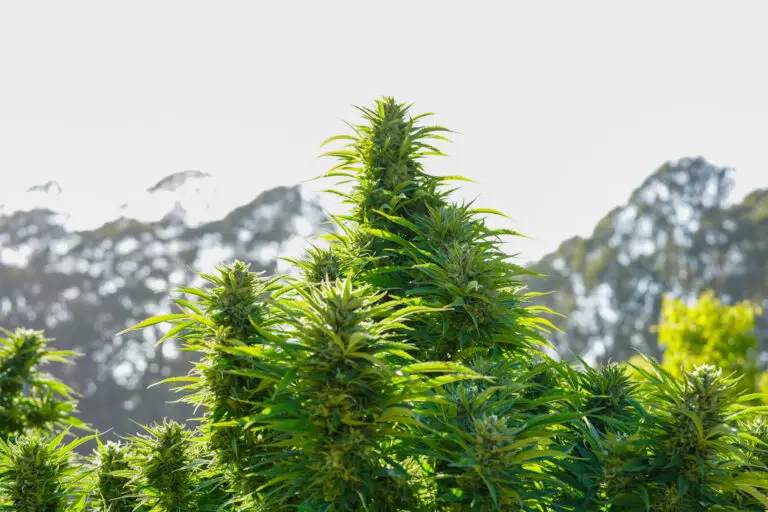
Growing cannabis outdoors is a little bit different than growing cannabis indoors. Mostly because you are working with nature. Rather than controlling the environment and, most importantly, the light cycle.
Determining when to plant cannabis outside in California or when the harvest season is in California is a bit challenging. That can vary depending on where you are in the state or your microclimate. Even the growing seasons differ because it is a long state with varying daylight hours, temperatures, and elevations. The fact is it is a big state with cannabis grown next to the coast, where we are, all the way up to growing Kush varieties in the high desert country.
The great news is that no matter where you live in California, you can grow cannabis outside with great success. There are some spots in the state that grow better cannabis than others; some spots grow it so well that they developed strains specifically for their California climate. Overall, anywhere in the state can grow great weed plants outdoors. So light one up while we dive into the details to help you understand the ins and outs of how to grow outdoor weed in Cali. And free yourself from ever having to buy weed again.
California in 1996 became the first state to legalize medical marijuana. Mostly thanks to the hard work of the gay community in San Francisco to help treat the aids epidemic. Since then, Cali has been known for its relaxed stance on homegrown medical marijuana. With the legalization of recreational cannabis in made home growing legal for anyone 21 and up.
Pro 64 Cultivation laws for personal grows in 2026 permit adults to grow six cannabis plants per private residence. The California Department of Cannabis Control allows medical marijuana home growers in California to grow more than six plants if the amount is required to treat their condition.
Cannabis plants grown outdoors must be kept behind a locked gate, and cannabis cannot be visible to the public. What is great, as you probably don’t want people knowing about your giant cannabis plant in the backyard that is worth thousands of dollars.
Cannabis laws are further restricted by the county or city where you live. Making things more complicated, for example, in Santa Cruz, cannabis is the lowest police priority, meaning they won’t respond to any calls about cannabis. But in Bakersfield, California, cops will definitely respond to calls. So check you local laws to know see how priviate you need to keep you plants.
While it is important to know your local laws, the great news is no one is getting in trouble for growing six cannabis plants outdoors in California. The DCC might come knocking if you have 100 tho. Especially if you are in conversative learning. The crazy thing is, you can still harvest up to 60 pounds of cannabis off six huge cannabis plants. And that’s a whole lot of weed or money.
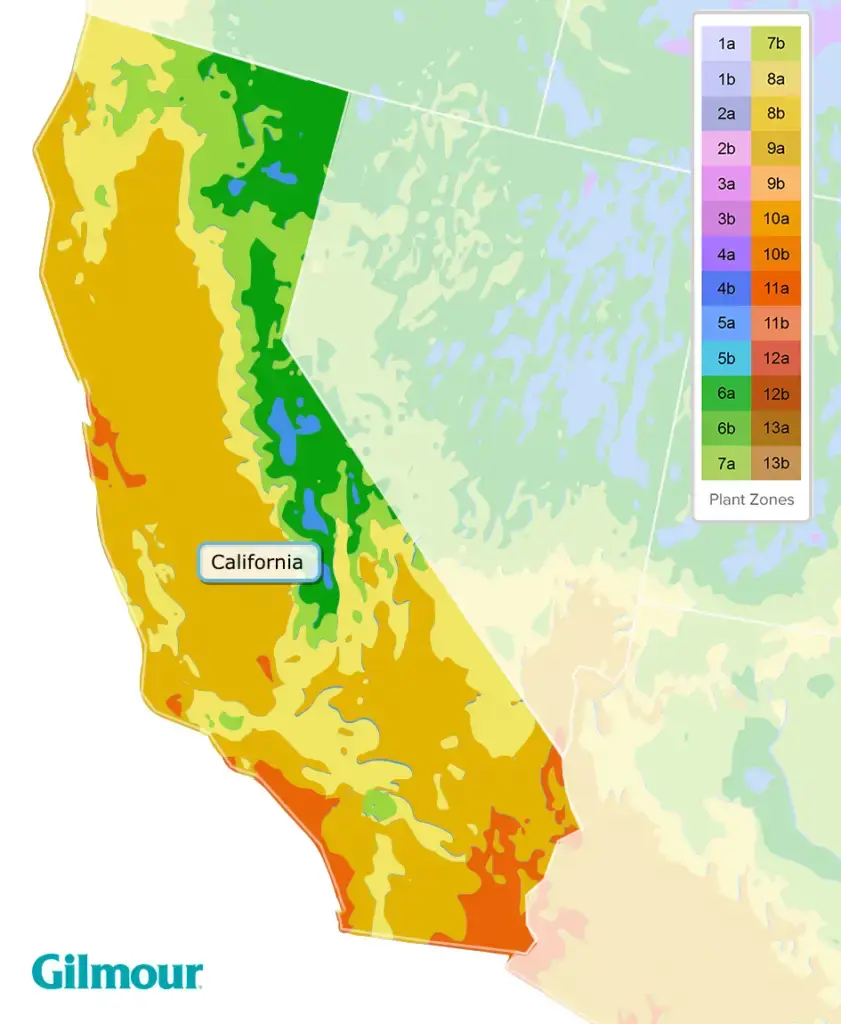
California doesn’t have the same four distinct seasons as other parts of America. Especially in LA. But that’s a good thing when it comes to growing cannabis, as if it is always sort of summer, it extends the growing season. Because it is such a large state with many different elevations, there are many different growing zones that affect when your cannabis plant will flower or when you should plant.
The seasons are worth considering when comparing the difference in growing cannabis outdoors in NorCal vs SoCal. NorCal’s weather is a bit gloomy, with rain and cooler temperatures. Southern California is a sunny, warm desert, which means dry air and hot temperatures. Additionally, the state’s size means the South and North receive different amounts of sunlight each year, which can affect when plants in California begin to flower.
California cannabis plants germinated earlier in the year can yield up to 10pounds when grown in full sun and in a pot that’s 200 gallon or more. Plants started later in the growing season will grow much shorter, but can still yield a respectable amount of weed in just a few months in the California Sun.
If you are in Northern California, the outdoor growing season runs from May to October. Plant anytime between then. Or you can plant outside after the first frost. Growers in Nor Cal will often start their seeds indoors before moving them outside, and because of the difference in daylight hours, plants that are grown outdoors in SoCal will flower earlier than the same plant in NorCal because of the longer days in the fall. In the late harvest season, watch out for early rains that can cause your buds to rot.
In Southern California, the primary season is the same as in Northern California, but it starts a month earlier, as its warmer in April. It tends to end a little earlier as the time zone is closer to the equator so plants will flower a little earlier. But as the weather is nice you can plant as late as the end of September. Growing outdoors year-round in the warmer parts of the state is possible using autoflowers or photoperiods, especially if you bring your plants indoors at night or add supplemental lighting.
One of the hotter parts of California can also grow some of the best cannabis, with it’s warm nights and long days. Planting a high-heat-resistant cannabis strain will improve your success rate, as will providing your plants with shade cloth on the hottest days of the year. The foothills of the Serras make for some of the best growing climates in California for quality outdoor cannabis. The elevetion is not too low that it can get too hot, and the plants get high concenration of UV rays. .
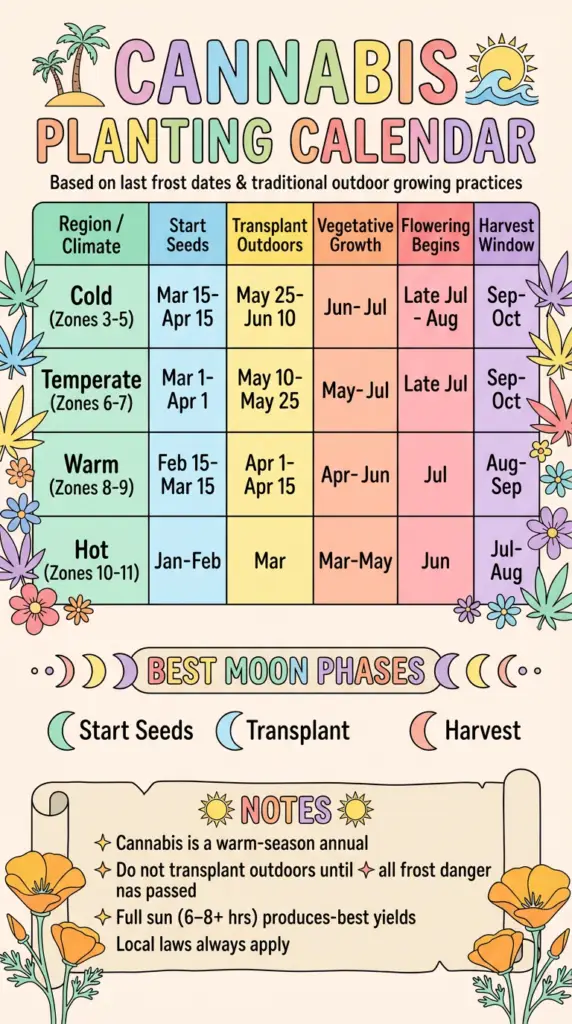
Timing is everything when mastering the California cannabis growing season. Whether you are a backyard hobbyist or an aspiring craft cultivator, knowing exactly when to plant cannabis in California can make the difference between a mediocre harvest and a legendary yield of “Golden State” quality.
It is easy to think that if you dont plant early in the growing season that it is too late. In fact cannabis can be planted anytime outdoors between May and September. With the eariler it is planted the larger the plant, and the later in the growing season the smaller it will be. A seed that is planted in Augest can still easily harvest over a 1/4 pound of cannabis.
In general, you’re probably going to want to plant your pot at the beginning of May if you are growing a really big plant. The latest you should plant your pot is late August.
Northern California (NorCal): In the legendary Emerald Triangle (Humboldt, Mendocino, Trinity), the best month to plant cannabis is typically May. Waiting for the soil to warm up and the last frost to pass is crucial for plant development. Get a head start by planting indoors in late Feb.
Southern California (SoCal): Growers in San Diego or Los Angeles can often start as early as mid-March to April. The mild Mediterranean climate allows for a long vegetative stage, though supplemental lighting may be needed early on to prevent premature flowering as the day light hours get to 12/12 sooner than NorCal.
To first understand when your plant is going to flower in California, you first must understand what causes cannabis to flower when going outdoors.
Cannabis will start to generate flowering hormones after the summer solstice, when the days begin to get shorter. The amount of shade your plant gets in the morning or evening is also going to affect how soon your plant flowers.
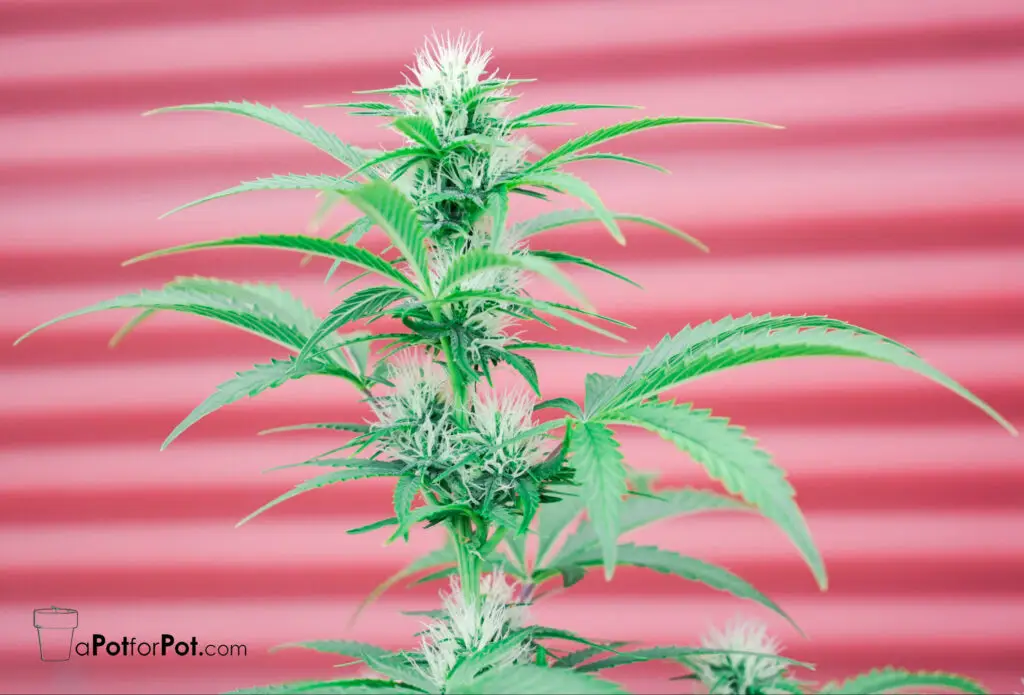
Flowering Start: Late July to Early August.
The Science: Because NorCal is further from the equator, it experiences a more dramatic shift in daylight hours.
Harvest Window: Late September to mid-October. NorCal growers must often harvest by mid-October to avoid the “early rains” which can cause bud rot (botrytis).
.
Southern California (SoCal)
The Science: In Southern California (Los Angeles, San Diego, Inland Empire), the days light hours
Harvest Window: Mid-October to November. Because SoCal has a much drier, warmer fall, growers can often push their harvest further into November, allowing “long-flowering” Sativa strains to fully ripen without the threat of frost or heavy rain.
Both NorCal and SoCal growing season is a long one, and a good few months longer than where cannabis evolved to grow. That’s one of the reasons we can cannabis plants grow so big in California. But that also makes trying to figure out when the exact date your plant is going to be ready to harvest a bit tricky. I know, you have been water this dam plant all summer long and your varication itch is getting stronger. But the only correct answer is it will be ready to harvest some time in what is know as “Croptober”.
Exactly when your plant is ready has a lot to do with it’s genetics and how many hours of sunlight it is getting. If you plant gets shade in the morning or evenings this can cause it to flower earlier. Keeping a light on it at night for a few hours will keep it in its vegetative state if you want to harvest later in the year.
Some cannabis genetics will only trigger flowering when they get 12 hours of darkness, typically indica dominate strains. Some sativa strains will start to enter their flowering cycle at 10 or 11 hours of darkness. A good rule of thumb is that once you notice you plant has started to flower, your plant will be ready to harvest in around 80 to 100 days time.
A lot of when cannabis is exactly ready to harvest has a lot todo with the growers personal preference and their level of patience. Cannabis harvested on the early side is typically a more buzzy high. As cannabis harvested late in the season is more of a sleepy effect. Using a magnified glasses to check the color of the trichomes is a great way to tell.

If you can’t wait all summer long for your cannabis plant to flower, then there are a couple of ways to get multiple harvests a year. Keeping you topped up with fresh buds. This can be achieved by selecting the right strain or by using light deprivation.
There are two main varieties of cannabis. Photoperiod and Autoflowering. Autoflowering cannabis harvests in around two to three months from planting. Regardless of the light cycle of the time of year. Because of their short life span, they typically grow quite short and can yield up to 8oz.
Because of this, autoflowering cannabis that is planted outdoors in April will be harvested a few months later in June. Enabling you to have several harvests over the course of the California growing season.
Photoperiod plants, which are affected by sunlight during their life stages, can be manipulated to a greater extent. It all depends on how much growing time and sunlight they get. California cannabis plants grown earlier in the year can be induced to flower early by reducing the sunlight they receive.
This is typically done by covering the greenhouse or shade structure with a tarp. By reducing the hours of sunlight by 2 or 4 hours every day. This signals to the plant that it is later in the year. This light reduction must be maintained tell the plant is cut down for harvest to prevent it from reverting back to its vegetative stage.
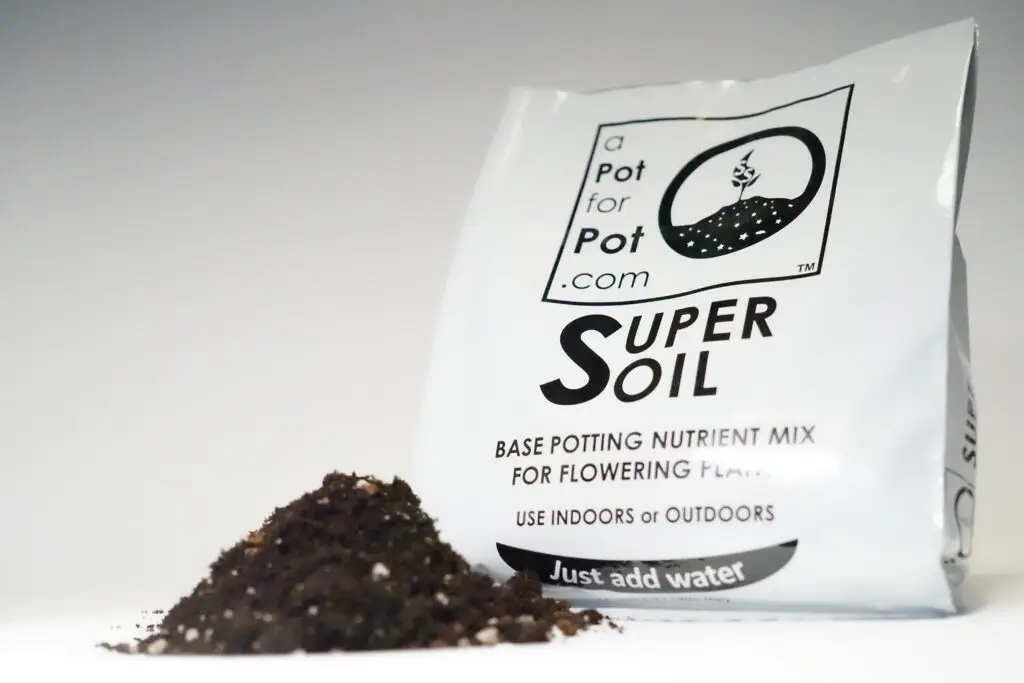
Outdoor cannabis growers have long known that the best and biggest plants grow only in high-quality soil. Northern California growers have been leading the pack in outdoor cultivation using organic soil and water. Growing amazing cannabis that is free of any salts or chemicals. Super Soil is highly nutrient-dense, providing the plant with all the nutrients it needs from planting through harvest. The OG California Subcool Super Soil recipe has been the golden standard for growing 10-pound plants in California.
The cannabis plant in California can grow huge outdoors when it is started early enough, and it is in a big enough pot. Growers who want to grow plants that yeild over 10 pounds often use 500-gallon grow bags, starting the plants as early as February and only transplanting outdoors when they are a couple of months old. Smaller photoperiod cannabis plants can be grown by starting them later in the year.
At a Pot for Pot, we use a 35-gallon grow bag filled with Super Soil and Top Soil. With that you can grow a full season plant and at max harvest around two pounds. Which is a lot of cannabis for one person.
Of course, how much sun your plants receive determines how much water they need as well. If they are getting plenty of direct sunlight and the weather is quite warm, you’ll probably need to water them more frequently. However, it’s important not to overwater marijuana plants, as this can lead to mildew or mold growth.
Test whether you should water your plants again with the finger test. Simply stick your finger into the soil – down to the first knuckle – and pull it right back out again. If the soil is sticking to your finger (and is wet), you don’t need to water yet. If it comes out soil-free and dry, you should water now.
You can also check whether your plants need more water by weighing the pot, since the water in the soil is not always visible from the top. Place a pot filled with dry soil (without a plant) next to your plant, and compare their weights. If they are similar, it’s time to water. If not, don’t water yet.
One of the great things about growing outdoors it the fact that you can plant cover crops and companion plants alongside your marijuana plants. Cover crops can keep the soil nutrient-rich, such as clovers, which allow nitrogen-fixing bacteria to thrive in the soil.
Companion plants can also be planted to help keep the soil free of pests of all kinds. Planting basil nearby, for example, will keep away whiteflies, mosquitoes, asparagus beetles, and aphids. Parsley, on the other hand, attracts beneficial insects and birds that pollinate plants (which will at least help the plants around your weed to thrive, which in turn boosts your weed’s ability to thrive).
While California isn’t known for its torrential rainstorms, on the occasion that it does rain, it’s a good idea to bring in your plants if possible (such as if they are planted in a pot). If they are planted in the ground, you can use a plant umbrella or a black trash bag to protect them. While it might seem like rain would be a good thing for plants, in fact, it can make your plants get far too damp and take a long time to dry. That would encourage mildew or mold growth. Check out our grow kits if you’re ready to get started.
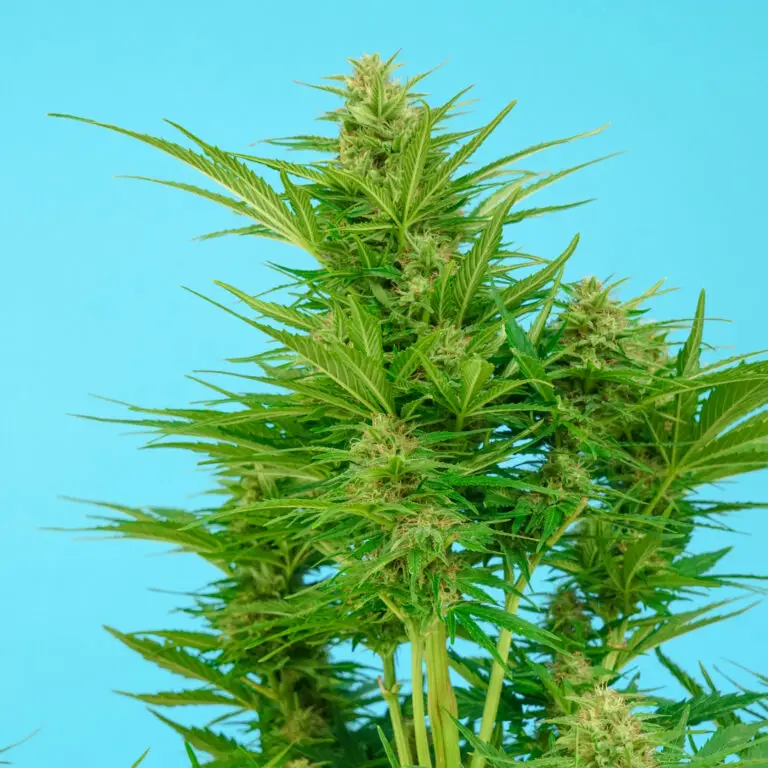
In California, the combination of coastal humidity and inland heat creates a unique set of challenges for cannabis growers. Success often depends on managing two main threats: destructive pests and fungal pathogens. The best prevention for cannabis is being preemptive on your pest management. Any experienced grower will tell you that once your plant gets infected its a battle of attrition.
In the Golden State, mold is often the “silent killer” of a harvest, especially during the foggy mornings of the Emerald Triangle or the humid late-summer nights in Southern California.
Powdery Mildew (WPM): Really not the biggest deal if you get it, but the best way to prevent this is with adequate air flow. Once a plant is infected eradicating it becomes very difficult and damaging to the final product.
California’s diverse ecosystem means growers must defend against a wide array of insects that can stunt growth or destroy flowers. Again, preventative measures are the essential to preventing infestations.
Caterpillars (Hemp Borer/Corn Earworm): Public enemy #1. These moths/butterflies lay eggs on the plants, and the emerging larvae tunnel into the plant destroying the buds and pooping all over the plant. Its the waste that triggers bud rot. The best defense is a bug net over the plant. Wasps will also eat the caterpillars.
Spider Mites: These shit heads are arachnids. They live on the undersides of leaves, sucking out nutrients and leaving behind yellow stippling (spots) and fine silk webbing in severe cases. Not the worst as they focus on the leaves not the buds. Apply neem oil a couple of times a month.
Successful California growers use preventative measures to keep infections at bay. Or what’s know as “Integrated Pest Management” (IPM) in the cannabis industry. This includes introducing beneficial insects (like ladybugs or lacewings), using organic sprays like Neem oil or Bacillus thuringiensis (BT) for caterpillars, and ensuring proper spacing for airflow. Good air flow is the solutions to many pest problems.
While California state law allows adults 21+ to grow up to six plants, outdoor cultivation is prohibited in the unincorporated areas of Los Angeles County and many of its cities. Residents must grow indoors in a locked, fully enclosed space. Always check your specific city’s municipal code, as “personal use” rules vary significantly between San Fernando Valley and the South Bay.
For the legendary “tree-sized” plants seen in the Emerald Triangle (Humboldt, Mendocino, Trinity), start seeds indoors in late February or March. You should transplant into the ground in mid-to-late May once the soil has warmed and the risk of frost has passed. Planting in May gives your plants a long vegetative stage to build the structure needed for massive fall harvests.
The biggest challenge for outdoor cannabis in Northern California is the early autumn rain. To prevent Botrytis (bud rot), choose “fast-flowering” or “early finisher” strains that harvest by late September. If you are growing long-season Sativas, use hoop houses or clear plastic covers to keep the morning dew and rain off your flowers during the final weeks of the flowering stage in NorCal.
Yes, but you need the right genetics. While photoperiod plants only flower once a year, planting autoflower seeds in Southern California allows for multiple harvests. Because of the mild winters in San Diego and Riverside, you can start a “winter crop” in January using autoflowers, though growth may be slower due to cooler soil temperatures.
Growers in Riverside and San Bernardino counties face extreme summer heat. Look for heat-tolerant, drought-resistant genetics like OG Kush or Durban Poison. These strains are adapted to Mediterranean and semi-arid climates. Using mulch to keep root zones cool and providing afternoon shade can prevent heat stress when temperatures exceed 100°F.
In the City of San Diego, you may grow up to six plants per household for personal use, but they must not be visible from a public right-of-way. Most local ordinances in San Diego County require the grow area to be secured by a fence or a locked gate to prevent unauthorized access, especially by minors.
While the strain of the plant may influence the its size, most marijuana plants’ size is determined by the amount of sunlight and darkness they receive during the day and night. Therefore, if you would love to have the biggest marijuana plants, you would want to plant them early in the season so that your plant receives plenty of sunlight and time to grow properly before the start of the flowering period.
Growing your plants outdoors means that they will have no shortage of access to direct sunlight. Marijuana plants require a balance between maximum sunlight and indirect sunlight(shade) for maximum productivity.
Marijuana plants best grow alongside cover/companion crops. Cover crops function to keep the soil rich in nutrients while companion plants help to keep the soil free from all kinds of pests. You can plant Marijuana alongside clover, basil and parsley as they are ideal companion plants.