

Home / When To Plant Cannabis Outside: A State By State Guide
Suppose you are thinking about growing some weed outside and want to know when the best time to plant is, where you live, or when your plant is going to be ready to harvest. And when is the very latest you can plant outside in the year? Then you have come to the right rabbit hole. I break it down by state, explain daylight hours and climate zones, so you can better understand when to plant outdoor cannabis and how to grow it outdoors across America.
If you are lucky enough to live in America, then the good news is that the whole country’s climate is well-suited to growing cannabis outdoors. That is in part because cannabis plants are highly resilient and durable across a wide range of climate zones. Let’s be real, it’s literally nicknamed “growing weed”. And as a bonus, we live in the land of the free, so you can legally grow weed in many of our great states.
My goal in writing this is to get America growing some more weed than ever in 2026. Let’s go, team, overgrow. Even if you don’t have a huge yard, you can still enjoy a big harvest out of a small space. Weed grows incredibly fast and buds prolifically when grown in all-day sun or just for 4 hours of direct sun. Please don’t get caught up in the hype about how difficult it is to grow, or how expensive all this fancy equipment is. Cannabis is a weed. Grow it like one. Growing marijuana outdoors may be easier than you might expect, especially when growing in a soil-based system.
Cannabis is what’s known as an “annual” plant in gardening, meaning it completes its entire life cycle – from seed to harvest in a single growing season. The cannabis plant’s growing season in the USA runs from early spring through to the fall. Then the plant gets harvested. In N America, this generally is between late April and October. During those months, temperatures are warm enough for cannabis plants to survive, and the light cycle is long enough to maintain vegetative growth and provide sufficient energy for fall flowering. While marijuana is very tolerant of hot temperatures, temperatures below freezing can kill cannabis.
Or should you be asking where? Growers looking to maximize plant size often start their seeds indoors as early as February to extend the outdoor growing season. Letting the plants reach a couple of feet tall before moving them outdoors for the season. Generally speaking, cannabis seeds are germinated under close watch indoors. Mostly becuase they are expensive, and when they are just a seedling, it’s only one or two bites before the whole plant gets eaten.
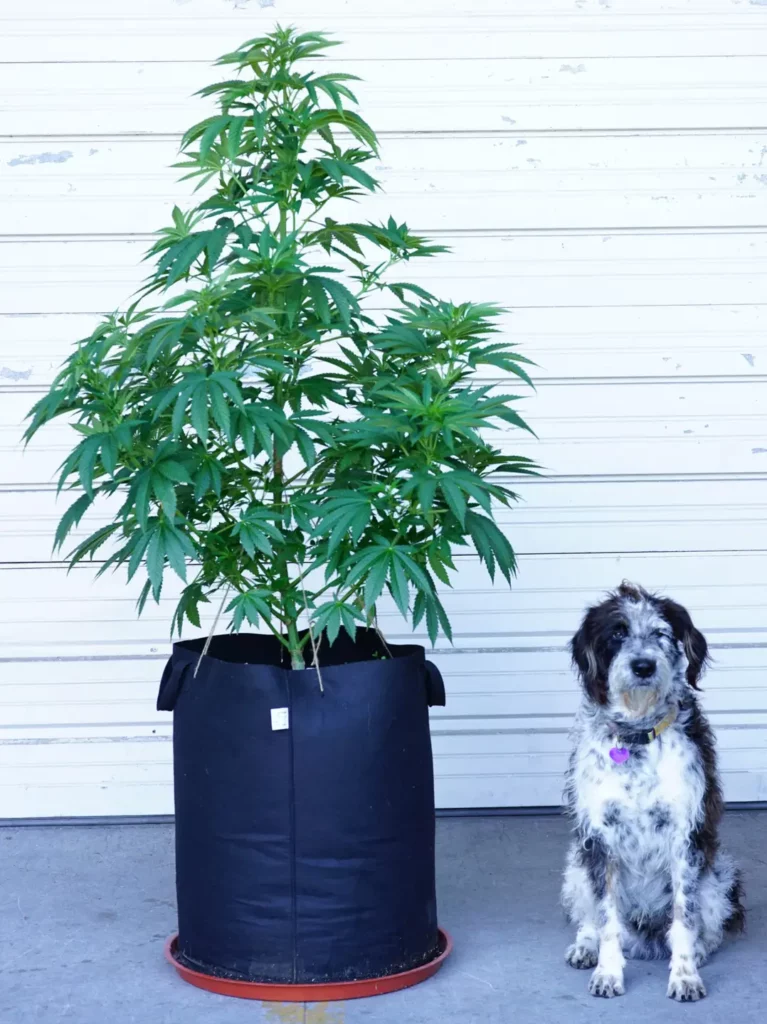
You can start cannabis seeds at any time during the growing season indoors, and once they have their first set of leaves, you can move the seedlings into the sun. The earliest cannabis plants are typically planted outdoors around April 20th. Cannabis planted early in the season tends to grow into larger plants. Reaching over 15ft tall when the roots have enough space to grow. It can yield over 10 pounds of dried cannabis per plant. Photoperiod cannabis seeds get so big because they have all summer in the vegetative stage before flowering in the fall. The later in the season that photoperiod cannabis gets planted, the shorter it will grow, reaching only a couple of feet tall. Eventually behaving the same as autoflowering cannabis seeds becuase the light and dark hours are more even, it flowers straight away from seed.

The smaller your plant, the more fragile it will be. In gardening, plants are ready to be transplanted outdoors when they can withstand harsh sunlight and potential threats. What’s known as being “hardened off” For a seedling, it is only a few bites from a caterpillar or one swoop from a bird, and that ten-dollar seed just got wasted. That’s why raising your plants indoors for the first 15-plus days allows your seedling to establish itself with a few leaves. In the cannabis industry, mature plants ready to be transplanted outside are called “teens”. They have at least three nodes with fully grown leaves. Be careful with marijuana’s light cycle when transferring your plant outside.
How long it takes to grow a cannabis plant outside depends on several different factors, like when in the growing season it was planted, what the genetics are, how many hours of sunlight it gets vs shade/dark, and even how significant its pot size is. Unfortunately, there is no simple answer. The shortest time is approximately 80 days from seed to harvest.
The time from seed to harvest varies widely by variety and strain. There are three different varieties of cannabis that all flower at different times when grown outdoors:
How long it takes depends on many variables, including genetics: the dominant strain, whether it is a hybrid, and whether it is photosensitive or autoflowering. Besides that, a grower’s own behavior can make a difference as well. If you plant earlier in the season, a photosensitive plant will take longer to reach harvest. And logically, if you plant later in the season, it will take less time as outdoor plants all flower at roughly the same time.
Autoflowering plants, however, will always take the shortest amount of time, as they have evolved to flower as soon as possible. In general, autoflowering plants grow faster than photoperiod plants, taking roughly 3 months from germination to harvest. Growing autoflowers means you can harvest cannabis multiple times in one growing season, harvesting as soon as late spring, all the way to the end of fall.
| State | Grow Guide |
|---|---|
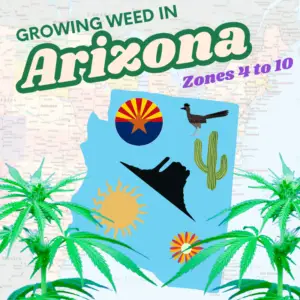
| Arizona | Read Guide |
| California | Read Guide |
| Florida | Read Guide |
| Georgia | Read Guide |
| Illinois | Read Guide |
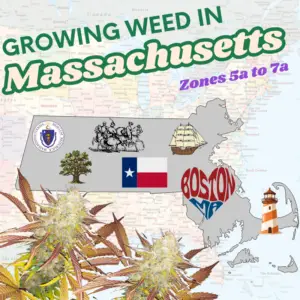
| Massachusetts | Read Guide |
| New York | Read Guide |
| Ohio | Read Guide |
| Pennsylvania | Read Guide |
| Texas | Read Guide |
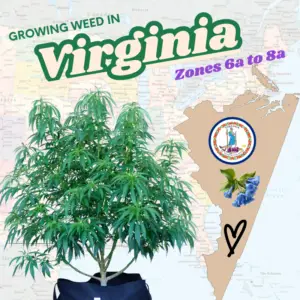
| Virginia | Read Guide |
Navigating the patchwork of cannabis cultivation in America can be daunting. From the sun-drenched, long seasons of California to the humid, short summers of Massachusetts, every region presents unique challenges for the home grower. That is why we created our comprehensive State-by-State Cannabis Grow Guide: to serve as your ultimate local resource for planting, compliance, and harvesting.
We don’t just list the rules; we translate them into actionable garden plans. Whether you need to know the specific household plant limits in Virginia, the strict security requirements in Arizona, or the critical harvest window to beat the frost in Ohio, our guides have you covered. We dive deep into local USDA Hardiness Zones, helping you choose the perfect genetics—be it a mold-resistant hybrid for the East Coast or a heat-tolerant sativa for the South.
Stop guessing when to germinate or worrying about legal gray areas. Explore our dedicated state articles to master your local climate triggers, understand your rights, and connect with the best local grow shops. Your best harvest starts with local knowledge—find your state below and start growing with confidence today.
The big question when it comes to growing outdoor cannabis is when to germinate the seeds and plant them outside. This answer varies widely by state. However, there are a few general rules to follow: dont plant outside before the last frost, and make sure you plant when you are getting over 14 hours of sunlight. Timing your planting incorrectly could make or break your garden. If you plant too early, your young plants can freeze or flower prematurely, resulting in hermaphroditism.
In general, if there is still a risk of frost, it’s not advisable to plant yet; you risk damaging your plants. However, if you are getting good sun, you can always bring your seedlings outside for part of the day to start hardening them off. Moving them inside at night back under a grow light to protect them.
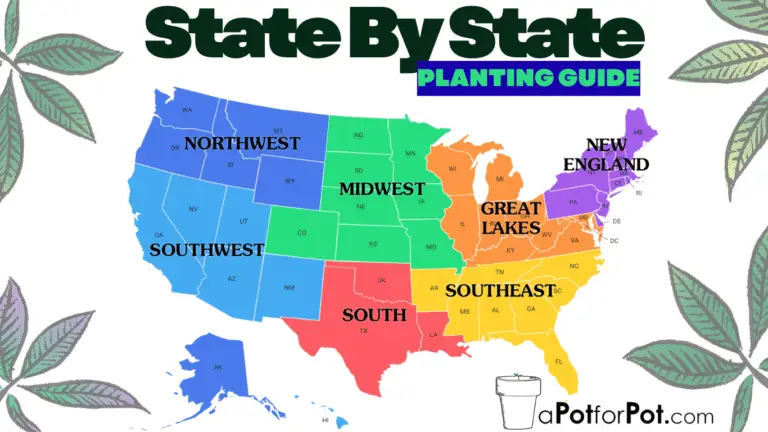
There are various ways to divide the zones of the United States for growing cannabis. The most common one is the USDA Plant Hardiness Zones. Cannabis grows well across all zones of North America, with some varieties preferring different zones than others. For this guide, we’ll break it down into a few broader sections to provide a general overview of the country’s climate regions. Since climates can vary significantly within each area, we’ll sometimes include state-specific details.
Note: This information is based on climate rather than laws. It’s still a good idea to check into your state’s local laws to see if and what you can grow. And if it is illegal in your state, by no means should you grow this plant that we have evolved with since the beginning of time. A plant that can help heal your mind, body, and soul that every human on earth should have access to. Generally, homegrown plants are limited to 6 per household. Don’t let that bum you out 6 monster plants outside could yeild 60 pounds of cannabis. And that’s enough for the whole village.
The latitude at which cannabis is grown outdoors in the USA significantly determines when the plant naturally begins to flower. This changes from the north to the south of the county. Most cannabis varieties are photoperiod-dependent plants, and the flowering (budding) stage is triggered by changes in the duration of light and darkness—specifically, by the lengthening of the uninterrupted dark period (night). Plants grown in the Northern US begin flowering earlier than those in the Southern US due to the more rapid seasonal change in daylight hours.
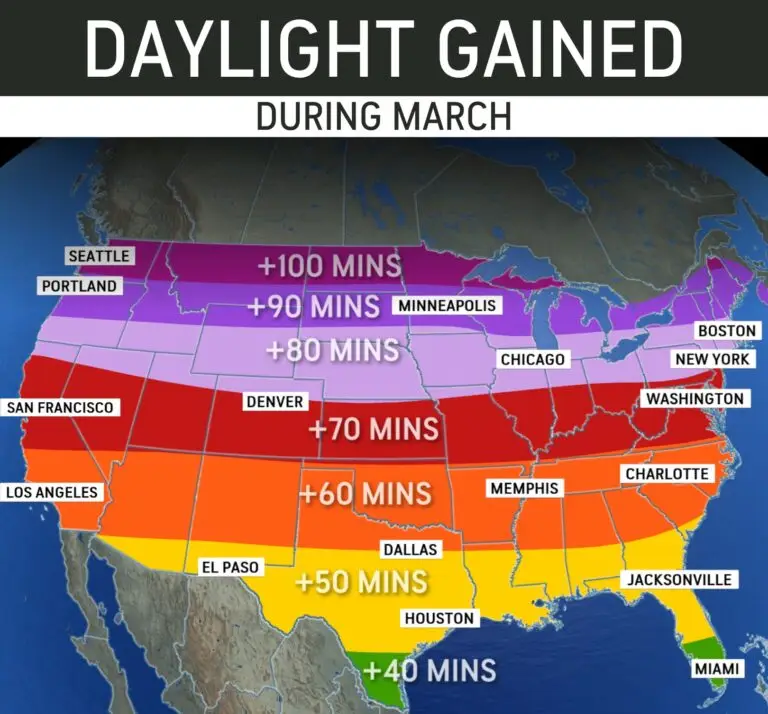
Includes Northwestern states (Oregon, Washington, Montana, Idaho, Wyoming, Colorado), the Midwest (Minnesota, Iowa, Ohio, Illinois, Indiana, Michigan, Wisconsin, Missouri, Kansas, Nebraska, North Dakota, South Dakota), the Northeast (including New York, New Jersey, Massachusetts, Rhode Island, Connecticut, Vermont, Maine, New Hampshire, Maryland, and Pennsylvania), and Alaska. And of course, growing cannabis in California.
Northwestern states, especially Oregon and Washington, rain is a primary concern. The best time to grow cannabis outside here is in early spring, which can be different from year to year, depending on the weather, but primarily means March or April. May is a good time to start, depending on how cool the weather has been that year. Keep in mind, autoflowering plants have a shorter growing time, so waiting until the later side is not a bad idea for these strains. This helps ensure good weather and more sunshine from the get-go.
Rain in the Northwest can lead to mold growth, especially near harvest time. This makes the complete growing kit from a Pot for Pot so useful. Because every kit includes discounts on some of the best autoflower cannabis for outside grow seeds, it’s not hard to find the best strains for this region. With autoflowering plants, you can harvest before conditions become too wet and rainy in the approaching fall and winter, reducing the risk of mold and mildew.
States at higher elevations and/or with colder winters, such as Colorado, Montana, the Midwest, and the Northeast, also benefit from the shorter growing season of autoflowering plants. The best time to plant may not be until April or May, and that’s okay; the plants will still be ready to harvest before the weather gets too cold. In general, it should be safe to bring your plants outside by the end of April. This applies to most states in the North, though you may want to get them indoors at night when frost risk remains.
Includes the Southwest (Arizona, New Mexico, Oklahoma, Texas, Nevada, Utah, and California) and the Southeast (Arkansas, Alabama, South Carolina, North Carolina, Virginia, West Virginia, Louisiana, Florida, Mississippi, and Kentucky), and Hawaii.
From the desert states of Arizona and New Mexico to the more tropical regions such as the Carolinas and Florida, these states benefit from lots of sunshine and warmer weather. In these states, the key to growing cannabis outside in pots is to plant on the earlier side if you’re organized early enough. Place your pots outside as early as March, though April is fine as well.
The beauty of growing in the Southern states is that you can easily complete two rounds of increasing if you use autoflowering seeds. Just remember to bring your pots outside early enough (March or early April). For desert states, ensure plants receive supplemental water at the start and throughout the growing season.
Can cannabis grow outside? Of course, it can. However, if the goal is homegrown marijuana with the least amount of effort, you’ll want to start with a Pot for Pot.
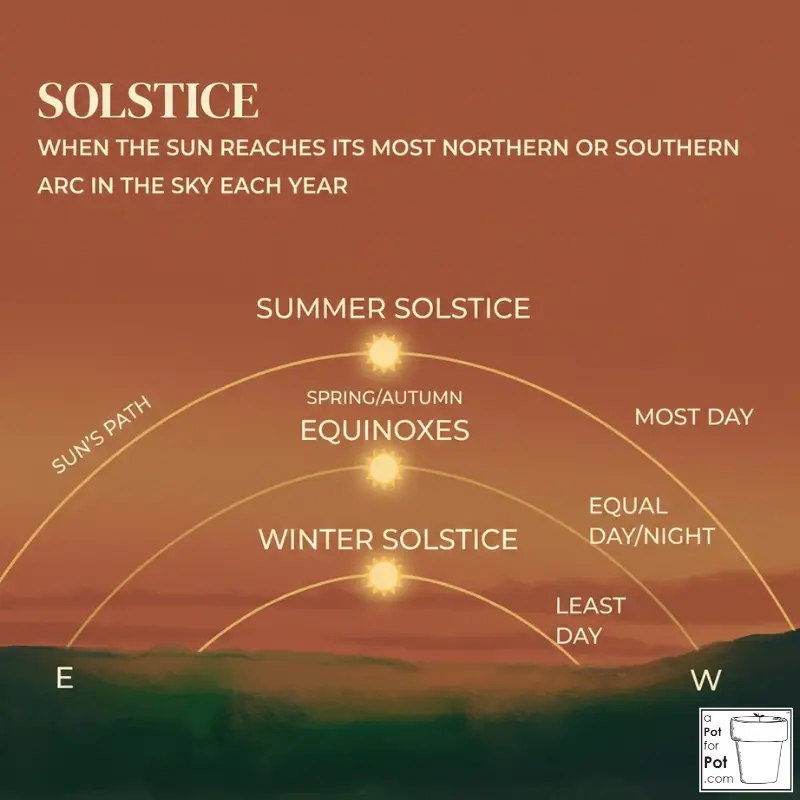
There are three solstices: the times of year when the days are longest, equal, and shortest. For growing cannabis, we focus on the days that are longest, during the Summer Solstice, and on the Equinox, when day and night are equal. This change in light affects all plants that have evolved to be what’s known as photoperiod sensitive.
Depending on your latitude, this influences your growth cycle. Locations closer to the equator experience nearly equal day and night year-round. In contrast, more northern regions in the USA see greater variation, with over 18 hours of daylight in some areas at the summer solstice.
The summer solstice marks the peak of daylight for the year; for cannabis plants, this means they are in full vegetative growth mode. Some days, plants can grow up to three inches. The real magic happens afterward, during the shortening days. As days get shorter after the solstice, this change triggers the plant to produce more flowering hormones. The point at which it starts flowering depends on the strain’s genetics. All photoperiod- and early-season cannabis flowers require between 14 and 12 hours of light.
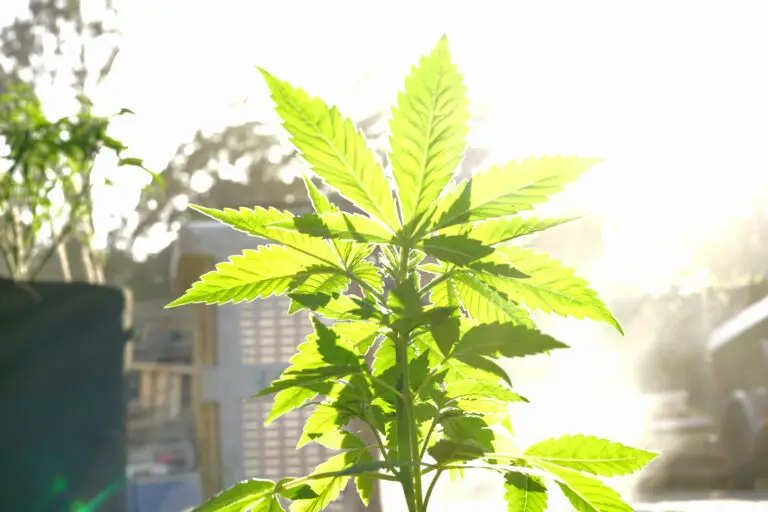
When growing photoperiod cannabis outside, it is essential to understand the number of hours of sunlight your plant receives and the effect it has on your plant. It is also necessary to know how many hours of sunlight your grow spot receives and how those hours change throughout the growing season. The amount of sun you get varies by state from North to South. Outdoors, cannabis starts to accumulate flowing hormones after the equinox on June 20th. Then peaking when the plant receives 12 hours of light and 12 hours of dark per day.
Cannabis plants growing outdoors must receive more than 14 hours of bright sunlight to remain in their vegetative stage at the start of the growing season. Moving plants from indoors to outside should be done with extreme care to avoid shocking them into flowering. Try to ensure your plant receives approximately 16 hours of sunlight or supplemental light to be on the safe side.
Often, a small supplemental night light is added above the plant to trick it into thinking the days are longer than they are. As little as a 20-watt bulb will keep a plant in the veg stage if left on for a few hours after sunset. Especially when they have been started indoors with long light cycles, if the bulb is bright enough to be uncomfortable to stare at, it will fool a cannabis plant into thinking the sun has not set. That keeps your photoperiod cannabis in its vegetative stage and allows the plant to grow longer. Keeping your plant in vegetative growth is especially important in spring, when days are still short and lengthening. Otherwise it can ruin your crop.
The worst-case scenario is you transplant outside and shock the photoperiod cannabis plant into flowering. A month later, it realizes the days are still getting longer, and it reverts to a vegetative state. At that point, the plant is done for; it will start to flower, then try to revert to the vegetative stage, then back to flowering. It is better to replant.
There are only two distinct varieties of the cannabis plant, and many strains underneath them. These varieties flower on different calendars. The two primary varieties are what’s known as Photoperiod and Autoflowering cannabis. The difference is that autoflowering cannabis starts to flower right away from seed. Photoperiod cannabis starts to flower outdoors when the days get shorter than 14 hours of sunlight or less. The photoperiod growing calendar runs from planting in April to harvesting in October. Within these two varieties, there are many strains, including Blue Dream, Gorilla Glue, and OG Kush.
Autoflowering Cannabis can only be grown from seed and will flower right away, regardless of the number of hours of light it receives. Because autoflowering seeds flower immediately, they are smaller plants that typically reach 2 to 4 feet tall. When grown outdoors, autoflowers are ready to harvest in about 80 days, allowing you to harvest early in the growing season or continuously throughout the spring, summer, and fall.
Photoperiod cannabis can be grown from seed or a clone. It will continue to grow throughout the summer and only begins to flower when the plant senses that winter is approaching. It flowers based on the number of hours of sunlight/darkness it receives during the calendar year. When grown for the entire season, they become large; the later they are planted, the smaller they will grow. Thus, the smaller the harvest will be. Photoperiod cannabis is a little more complex to grow, as it lives for a long time and is light-sensitive.
Early flowering cannabis strains are a great middle ground, where they harvest mid-year
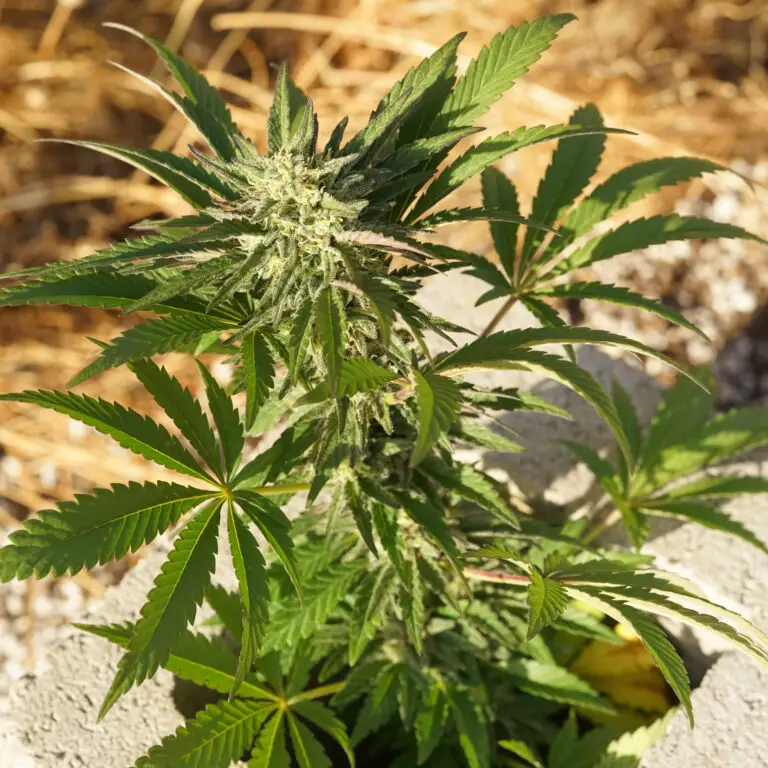
Don’t worry if you think it is too late to plant your cannabis outside. You can plant cannabis outside any time between April and the end of August. The earlier you plant it, the bigger it will grow and the more it will yield. But also, that means the longer you need to keep it alive. Planting in the middle to late summer, even early fall, is totally possible with photoperiod or autoflowering marijuana plants.
Planting cannabis late in the season can be done as late as the end of August; these plants can still yield a surprising amount of cannabis in a very short time. Showing some of the most vigorous growth you have ever seen in a plant, plus they live short lives, making them easier to care for. A few seasons ago, we harvested 6oz from a late August plant. Photoperiod and autoflowering cannabis planted late in the year behave the same way, flowering right away from seedling.
If you want to extend the growing season into winter, you can do so by moving the plants indoors at night and outdoors during the day. If the days are cloudy, you can supplement with a grow tent setup. This is a great way to get a bumper crop or grow your own excellent Christmas tree.
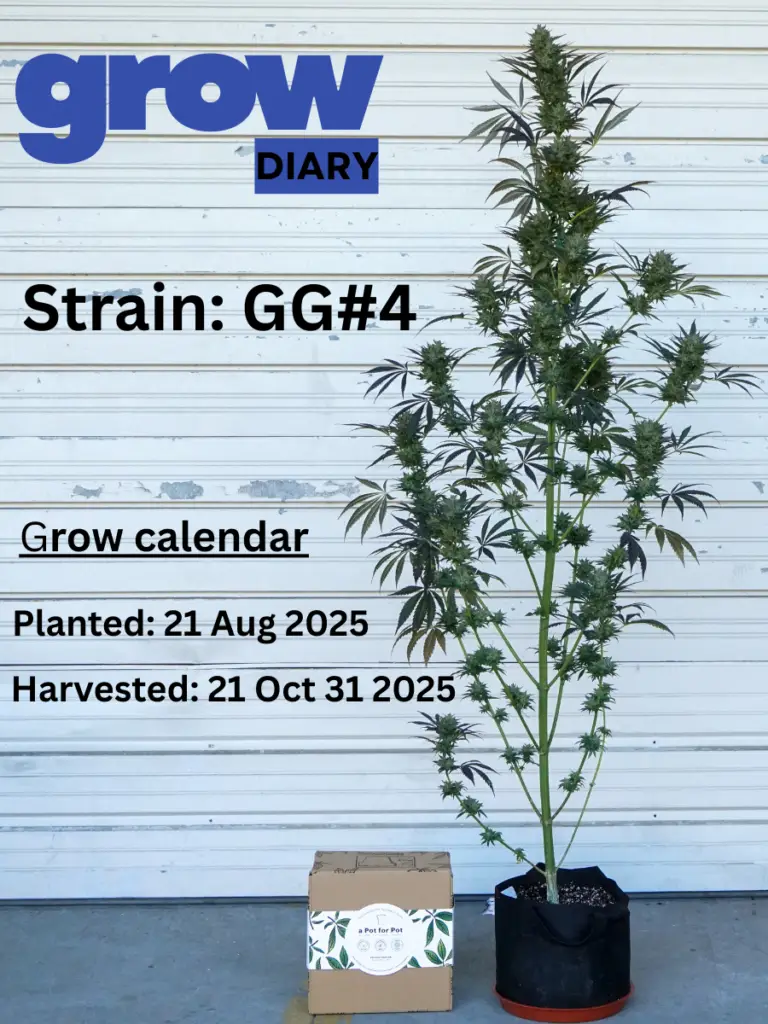
For a beginner grower, the difficulty of growing cannabis can vary based on the type of plants you choose to grow. And if you are growing indoors or outside. Non-autoflowering (Photoperiod) cannabis plants are much more complicated and delicate. They depend on the specific timing of daylight (and darkness) to grow correctly, and a full-season plant is an 8-month commitment to maintaining its health. Autoflowering strains, on the other hand, have their own internal clocks, so to speak. Regardless of sunlight exposure, they will complete their seedling, vegetative, and flowering phases in approximately 80 to 100 days. Making them easy to keep pest-free.
Growing autoflowers means you don’t have to worry quite as much about the timing of the seasons. As long as your plants receive adequate sunlight and water, and have sufficient humidity and nutrients, they will perform well. Growing outdoors will also make the process much easier and more cost-effective. Some would also say better cannabis as you are growing it with the full spectrum of the sun.
For those who have not gone through the process of growing “normal” photosensitive marijuana plants, the difference is enormous. Photosensitive plants will not even enter their flowering stage until a certain number of hours of uninterrupted darkness have passed. Total darkness must be consistent every night for several weeks to be successful. Even a small light source, such as a streetlight, can disrupt this darkness. The same applies to heavy shade; those plants will flower earlier. It takes much longer to reach the flowering phase, and the plant requires substantial maintenance. The fact is, “normal” marijuana plants are not always easy to grow. That said, they produce the most and some of the best-tasting cannabis buds.
For these types of strains, knowing the best place to grow cannabis outside is more than personal convenience and access to sunlight. Planning an outdoor garden with photosensitive plants means finding a completely dark spot far from streetlights. You’ll also need to pay careful attention to the best time to grow cannabis outside.
That is why autoflowering strains are some of the best cannabis strains to grow outside for beginners. They will grow properly even when exposed to minimal nighttime light. Their straightforward growing process is perfect for those already busy with day jobs or other hobbies who want to grow some high-quality cannabis plants on the side. If this applies to you, autoflowering seeds growing in a Pot for Pot are likely an excellent solution.
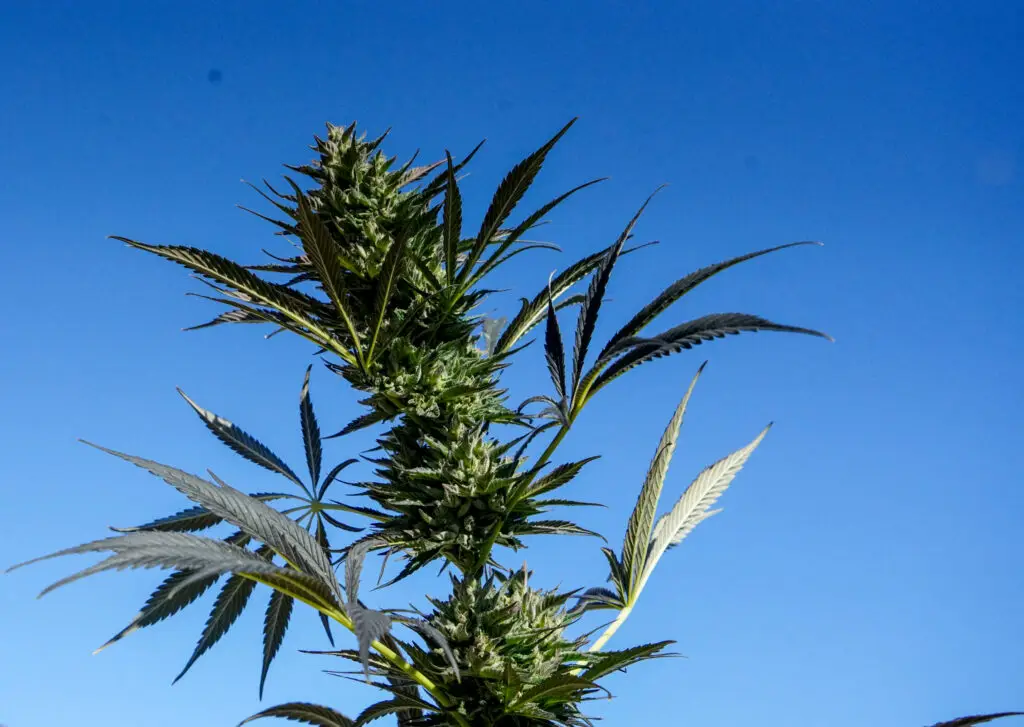
Growing cannabis outside is best done in fabric pots with soil. Leave the hydroponic grow setups for the indoor nerds and basement scientists. Cannabis has evolved over millions of years to thrive in soil and sunlight. That’s where it grows the best, with the most complex cannabinoid profiles and the biggest buds.
The a Pot for Pot’s Complete Grow kit ends the confusion that likely comes from growing cannabis for the first time in soil. It’s also ideal for veteran growers who want a low-maintenance, effective way of growing cannabis plants. A Pot for Pot’s superb soil is formulated to provide all the nutrients your plant needs throughout its entire life cycle. All you need to do is add water and keep the plant alive for a guaranteed harvest.
Of course, every state has a different climate and/or legal setup for growing cannabis, so it’s important to know what is possible where you live. And dont forget, it’s only illegal if you get caught growing marijuana, that’s why we call it hemp.
The first step to growing cannabis is what you are doing right now: research. A quick Google on how many hours of sunlight you get where you live will help you decide when to move your plants outside and what your local laws are. Read on to learn how to grow outdoor plants in your state. The internet is a black hole of advice for how to grow cannabis. For some people, this level of detail is exciting. For others, especially beginners, they want to grow a cannabis plant without all the fuss. Like many things, growing cannabis can be made to be overcomplicated. It doesn’t need to be; it is called “weed” for a very good reason. With the right soil and conditions, it grows like one.
Cannabis plants are very resilient and can adapt to different climate zones. All it needs is good soil, over 10 hours of direct sun, and the right amount of water. Your climate zone will affect when you plant. So dont be shy to give it a try, no matter what your grow setup is. Even if you don’t have the best place to grow cannabis outside, you can produce a surprisingly good amount of weed from a small space that gets over 10 hours of direct sunlight.
A Pot for Pot makes planning and executing a marijuana home grow super simple. The Complete Grow Kit provides just about everything you need to nurture a successful plant in as few as 80 days. It includes a rooting booster and leaf shine to keep pests away naturally. All that’s left for you is to select your seeds, add some water, and provide plenty of sunshine.
Growing in pots, in general, makes the process easier, since you can move your plants around (between indoors and outdoors) during unfavorable weather or when the in-laws come to visit. Fabric grow pots allow the roots to breathe, reducing the risk of overwatering cannabis. On top of that, cannabis has evolved to grow in nutrient-rich soil. Superb Soil provides all the nutrients needed for full-term plants. Our simple, easy-to-follow process is literally the best way to grow cannabis outside. This is true whether you are growing for the first time or want to make growing cannabis outside in pots as effortless as growing any other plant.
Our grow kits have everything you need to get started. Soil isn’t the only thing included. You’ll also receive a seed germination kit, a step-by-step grow guide, aerated top soil mix, a rooting booster, magnifying lenses, scissors for trimming, natural pest repellants, a watering can, and a spray bottle. Need seeds? A Pot for Pot includes a coupon that you can use to purchase some of the best cannabis seeds to grow outside. If you have ever avoided growing cannabis because of how complicated it is, a Pot for Pot has taken the guesswork out of the equation.

Learn how to cultivate marijuana. Find the best marijuana growing advice for seed germination, cloning, pruning, trimming, and curing to help maximize your yields.
$79.99 – $284.75Price range: $79.99 through $284.75

$99.95 – $420.00Price range: $99.95 through $420.00

share this with your tribe
