
Every year a few strains get most of the attention among home growers. This list rounds up twelve that keep coming up: long-time classics and newer favorites. For each one you will find where it comes from, how it smells and tastes, and what to know about growing it at home.
Home growing is legal only in some places and the rules change, so check your local law first. This guide is for adults 21 and over where home growing is legal.
What Makes a Strain “Hyped”?
A hyped strain is one growers keep asking about: it has a standout flavor or look, a strong reputation, or a good story. Seeds for many of these are easy to find, and most do well in a home grow when you give them the basics.
2027 Most Hyped Strains
Here are the twelve strains to know.
Critical Kush
Critical Kush is an indica strain from Barney’s Farm, the Amsterdam-based breeder behind strains such as Liberty Haze and LSD. It is a cross of the well-known OG Kush and Critical Mass.
As a 100% indica, Critical Kush grows thick, dense buds. Good quality flowers have an earthy, kushy scent with hints of citrus that gets stronger when the bud is ground up, and a taste similar to spicy pine. The smell is strong, so plan for odor control if you want to keep things discreet.

Trainwreck
Trainwreck is a classic sativa-dominant strain, about 90% sativa, with a tall, bushy look. It stands out from many sativas because it also shows some indica traits. It grows well both outdoors and indoors, and it has stayed popular with growers for a long time.

GSC
GSC is short for Girl Scout Cookies. It is the flagship strain of Northern California’s Cookie Family, who crossed OG Kush with their own F1 Durban Poison to create it. The strain has won several Cannabis Cup awards, and family members such as Platinum Cookies and Thin Mint are popular in their own right.

Chemdog
Chemdog is often spelled “Chemdawg,” though the breeder, Greg Krzanowski (who also goes by Chemdog), dislikes that spelling. It is a phenotype of the strain Dogbud, which he first received from two fellow breeders, Joe Brand and P-Bud, in a Grateful Dead show parking lot in Deer Creek, Indiana, in the 1990s. From the seeds he found in that bud, he grew out four and got three female plants, named “Chem Dog” (now known as Chem 91), “Chem Dog A” (now called Chem’s Sister) and “Chem Dog B.”
The name comes from the nickname Chem, for the plant’s distinct “chemmy” diesel flavor, combined with Dogbud, the source of the seeds. Chemdog genetics live on in strains such as Sour Diesel, Stardog and GMO Cookies.

Amnesia Haze
Do not confuse Amnesia Haze with Amnesia, which is a cross of Super Silver Haze and Bubble Gum. Amnesia Haze is an award-winning sativa strain with a spicy, slightly citrus and earthy taste.
Related: How To Be a Professional Cannabis Grower

Ghost Train Haze
Ghost Train Haze has won multiple awards. It has a sweet, pine-like aroma with a whiff of spice, citrus and lemon. Even breaking apart a single bud can fill the room with scent, so odor control matters with this one. The taste is gentle and reminds many growers of OG.

Strawberry Banana
A frosty combination of Amsterdam and California genetics, Strawberry Banana was bred by DNA Genetics in collaboration with Serious Seeds. It comes from a male Bubble Gum and a female Banana Kush, and it is a multiple-time first-place winner at the Cannabis Cup.
It is an indica-leaning hybrid with a sweet, mildly fruity taste. The plant is known for its heavy resin output, which makes it a favorite for concentrates, and with proper care it produces resin-ripe, frosty buds.

GG4
GG4 is also called Gorilla Glue and Gorilla Glue #4, but it is officially named Original Glue for now. It was bred by the founders of the GG strains, Lone Watty and Josey Whales, from an accidental cross of a hermaphroditic Chem Sister with Sour Dubb and Chocolate Diesel. When fellow breeder Mardogg grew out four different phenotypes, Whales decided #4 was the winner.
The strain is widely available. In 2015 at the High Times Cannabis Cup, 125 GG4 cuttings were released so growers could raise GG4 all over the country. The flower is aptly named: it is so sticky to trim that it gunks up scissors with every snip, a sign of the heavy trichome coating.

Bruce Banner
Bruce Banner is named after the alter ego of the comic book superhero the Hulk. It is a nicely balanced hybrid, the friendly side of the Hulk. The flavor is slightly citrus and more earthy than sweet. It is also one of the easier strains on this list to grow.

Godfather OG
Godfather OG won the title of best indica strain at the High Times Cannabis Cup in 2015, and it is often called the top of the OG strains. It is a true hybrid, and the flowers have a grape taste. There are various “Godfather OG” strains, so ask whether you are getting the original or a different variety.
Related: Best Indica Strains

Future #1
Future #1 first came out of 7 Points Oregon and is now offered by Anesia Seeds Co. It is a Gorilla Glue #4 x Starfighter F2 cross. The flavor is primarily citrus and pine, leading to a tropical evergreen taste.
Growers note the size and density of its buds and the heavy coating of trichomes. It is also accessible for beginners: just make sure it has good soil and a lot of light.

The Toad
The Toad is a strain from Tyson Ranch, a cannabis brand co-founded by Mike Tyson. It is an indica-dominant strain derived from Chemdog OG and GSC. According to Tyson Ranch, the strain was offered to them by another grower, a proposition they gladly accepted. With the rebranding to Tyson 2.0, they have also launched the Midwest Toad, another indica-dominant strain.
How to Grow These Strains at Home
Buying these strains at a dispensary is one option. Growing your own gives you the whole plant, and it is often more affordable over time. A complete grow kit gives you everything you need for a lot longer than a few buds do. See our guide to growing your own marijuana to get started.
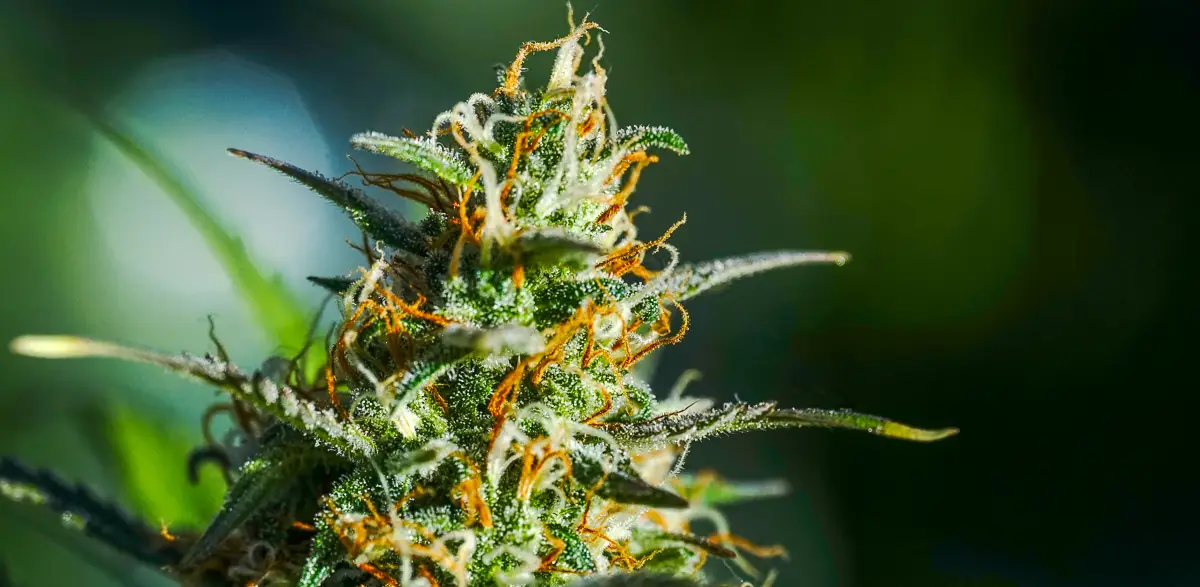
Trichomes are the tiny crystals you see coating the buds of a flowering cannabis plant. It is the grower’s job to set the plant up to produce as many as possible, which means sticky, resiny, sparkly buds. To get there, start with good genetics like the ones covered above, then give the plant the basics:
- Strain and genetics
- Healthy plants
- Light
- Proper harvest time
- Curing
Keeping plants healthy does not need to be hard. With a grow kit, you mainly need to provide a lot of light and keep the plant lightly watered, and avoid the common growing mistakes: over or under watering, heat stress, root rot, irregular light, and nutrient excess or deficiencies.
If you choose not to get a grow kit, you will also need a well-draining grow medium and nutrients. Nutrients can come from a specialty blended super soil, or you can use a liquid or powdered nutrient line that works for you, your budget and your values.
Cannabis loves light, and the more light the better. If your light is inconsistent or weak, the plant will still grow but will turn out spindly and lack robust buds. Outdoor plants need 8+ hours of direct sunlight, and indoor plants need strong, bright, full-spectrum grow lights for 16 to 20 hours a day during vegetative growth. Autoflowers ideally get 20 hours of light their whole lives. We cover this more in depth in How Much Weed Does One Plant Produce?
Knowing When to Harvest
Each cannabis plant has a two to three week window in the late flowering stage when it is ready. The buds give clear clues:
- Trichomes, the tiny sticky crystals, turn cloudy and milky, like white plastic, with rounded, mushroom-shaped heads. (Underdeveloped trichomes are clear and glass-like with flat heads.)
- Stigmas, the hair-like pollen catchers, darken to brown, red or orange instead of white, and curl inward.
The most reliable method is to check the trichomes, which takes a magnifying lens. Stigma color is less reliable, because an unpollinated plant can keep putting out new stigmas well past its prime.
Once you harvest, drying and curing properly is essential for the best final product. Curing breaks down chlorophyll, which lowers the chance of mold and brings out the plant’s unique terpene profile in both smell and taste. Cure by jarring your dried and trimmed buds and opening the jars daily for one to three weeks.
Seed Types: Photoperiod, Autoflower, Regular and Feminized
If you grow from seed, it helps to understand the main seed types, because each has its own advantages.
Photoperiod seeds
The main difference between photoperiod and autoflower seeds is how and when they enter the flowering stage. Photoperiod plants shift into flowering when the light cycle changes. Outside, that signals a seasonal change, so indoor growers mimic it with their lights. Photoperiod plants are generally considered more challenging to grow, but you have more control: they stay in the vegetative stage for as long as they get the right light, so you can grow a plant to your desired size before switching it to flowering.
Autoflower seeds
Autoflowering strains do not depend on the amount of daylight. They begin flowering automatically within about 4 to 5 weeks. They have a shorter life cycle, stay smaller (better for growing at home) and are not as picky about lighting. Autoflowering plants carry genetics from Cannabis ruderalis, which comes from Eastern Europe and Central Asia, where the growing season is short and plants had to flower quickly before the first frost. An autoflower life cycle generally takes about 10 weeks.
Regular and feminized seeds
Regular seeds have about a 50/50 chance of being male or female. Feminized seeds are bred so that every plant ends up female. If you want to grow flowers, feminized seeds are the easy choice. If you want to make your own seeds, you will need regular seeds. Feminized autoflower seeds give a fast harvest and remove the need to work out the plant’s sex. Browse our weed seeds to find one for your pot.
Related: Blue Dream seeds
a Pot for Pot Helps You Grow Your Own
We like making it easy to grow your own. Our simple marijuana grow kits make the growing experience effortless and effective, and we have everything both an experienced and an experimenting grower might need, including grow support. Start your personal marijuana garden with an a Pot for Pot grow kit.